29

[ DAILY ] · BB–D–261129

29 November 2026

Sunday, 29 November 2026 / 6 stories

Art, interiors, photography, designers

01

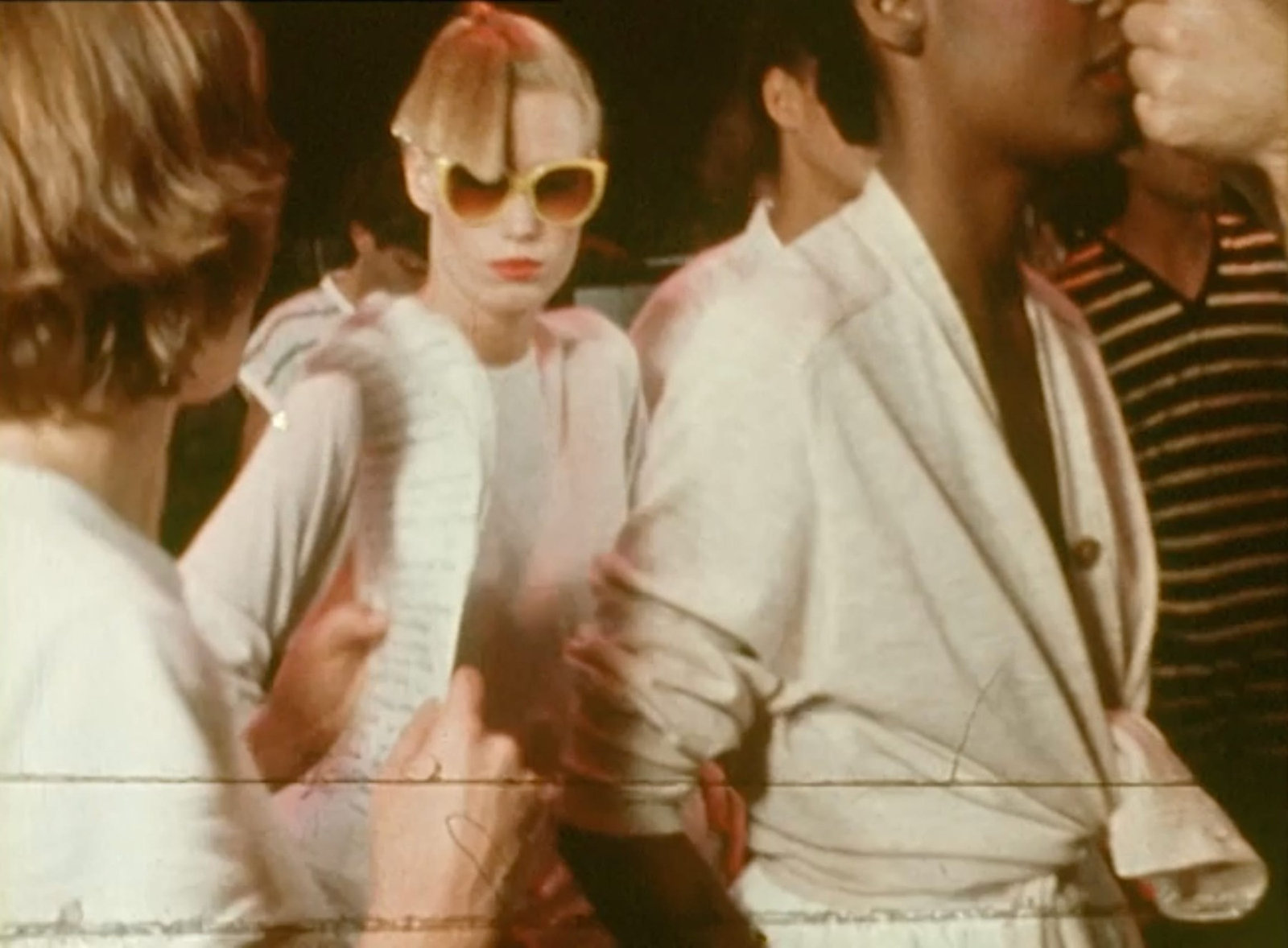
Still from “10 Designers in Paris” (1979).

Still from “10 Designers in Paris” (1979).

Source: System Magazine

Fashion and designers: Paris 1979 in an old Volvo — “10 Designers in Paris” returns to the screen

In 1979 six experimental filmmakers — three women and three men — drove around Paris in an old Volvo, filming the shows of ten designers. Each chipped in 4,000 francs, cameraman Jérôme de Missolz had a 16mm camera, and Vivian Ostrovsky invented a company called “Soft Ware Productions” and a story about working for American TV to get the fashion houses to open their doors. The commercial plan failed — the producer they showed the film to slept through the entire screening — but “10 Designers in Paris” became a canonical work of fashion cinema.

Speaking with Dal Chodha for System Magazine, Ostrovsky recalls Karl Lagerfeld, then still at Chloé, a lunch in his 18th-century interior with Anna Piaggi and Jacques de Bascher, a Mugler model walking out in flippers, and Pat Cleveland, Jerry Hall and Inès de la Fressange. She herself shot on Super 8 Kodachrome 40; years later she edited the outtakes into the film “Losing the Thread” (2014).

The rarely screened film will be shown in December at Ciné Lumière in London as part of the Fashion in Film festival. It also brings back names that time has erased: Angelo Tarlazzi, Tan Giudicelli and France Andrévie.
02

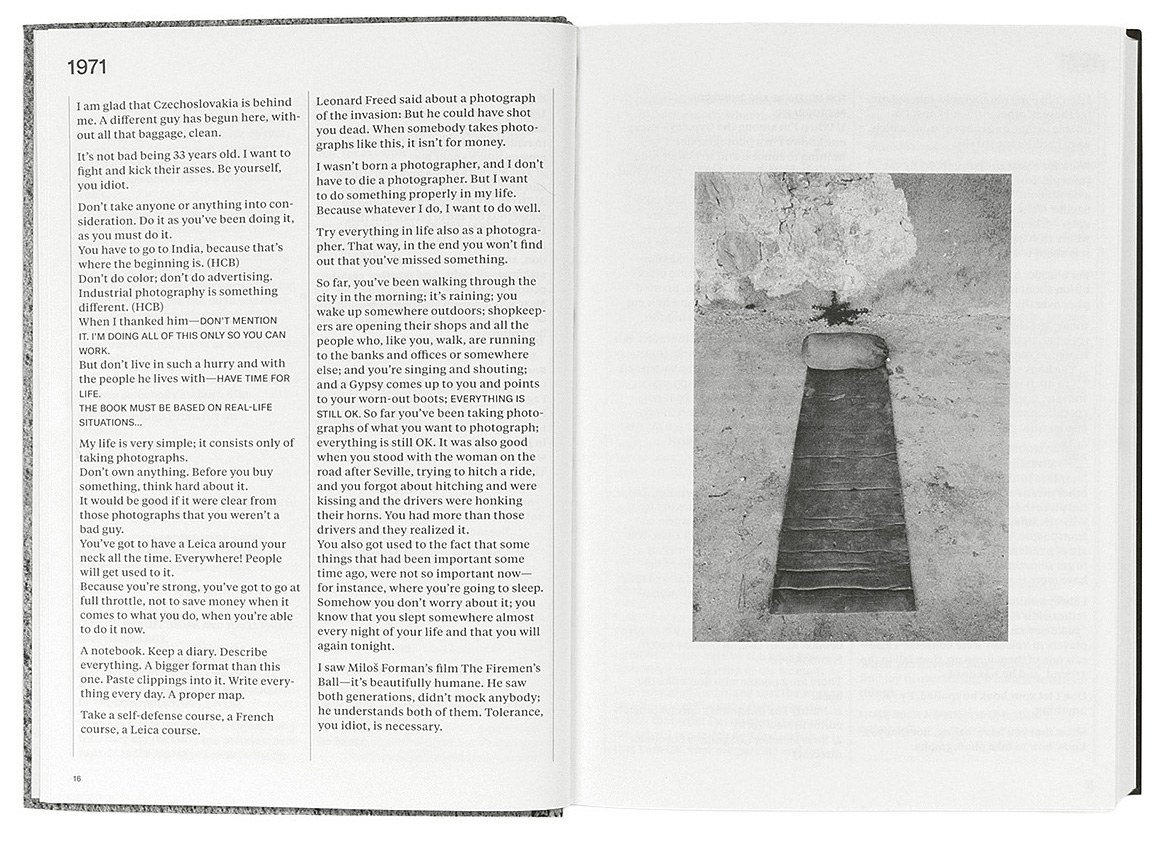
A spread from “Josef Koudelka: Diaries”.

A spread from “Josef Koudelka: Diaries”.

Source: 1854 Photography

Photography: “I carry my home with me” — the diaries of Josef Koudelka

Josef Koudelka became famous as the anonymous “PP — Prague Photographer” when The Sunday Times published his pictures of the 1968 Soviet invasion of Prague. After fleeing Czechoslovakia and joining Magnum, he chose the life of a wanderer: he travelled with a camera, a sleeping bag and little else, photographing, among others, the Roma. The book “Josef Koudelka: Diaries”, reviewed by 1854, shows what that “vagabond” choice cost.

In his notes the photographer spurs himself on, sometimes in capital letters, to “AVOID THE COMFORT OF GOOD BEDS, FOOD, CARS”. He can be drily funny when complaining about the “circus” of Les Rencontres d’Arles — to which he nonetheless returns and where he exhibits — and painful when he admits that taking photographs is “probably more important” to him than the woman he loves. The diaries, translated from the many languages he wrote them in, also reveal his craft: plans for exhibitions and books, remarks on printing and scanning, and a recurring rule that a photograph must have at least one place that is white and one that is black.

The text is interspersed not with his famous shots but with diaristic pictures — self-portraits, his feet, shadows and the humble places where he slept. “Home is where I am now. I carry my home with me,” Koudelka writes.

03

Installation view of “Sculpture After Stability”, Museum of Modern Art in Warsaw. Photo: Robert Głowacki.

Installation view of “Sculpture After Stability”, Museum of Modern Art in Warsaw. Photo: Robert Głowacki.

Source: Szum

Contemporary art: Sculpture held up on a promise — MSN enters the “noclip” code

The exhibition “Sculpture After Stability” (Rzeźba po stabilności) at the Museum of Modern Art in Warsaw, curated by Jagna Lewandowska and Szymon Maliborski, takes Marx’s “all that is solid melts into air” literally. Manuel Burgener’s glass panes are held together only by a vacuum pump, Isabelle Andriessen’s installations “sweat” and oxidise, Iza Tarasewicz’s clay compositions crack day by day, and Alexandra Hunts’s ceramic insulators are coated in a glaze made from toxic sludge. Olga Balema lays almost invisible sheets of polycarbonate on the floor, and Gizela Mickiewicz blocks the museum window’s view of Marszałkowska Street with a glass relief.

In her review for Szum, Zuzanna Stempska compares the show to a game in which someone has typed in the noclip cheat: objects pass through walls, drop out of everyday life and blend into the building so that it is hard to tell sculpture from ventilation. She credits MSN with raising the art of decay, for the first time, to the rank of a major institutional event.

She notes, however, that around 90 per cent of the artists have permanent representation with commercial galleries, so the escape from the market is only apparent — and the fragility is kept alive by the invisible work of installers and conservators armed with feather dusters.

04

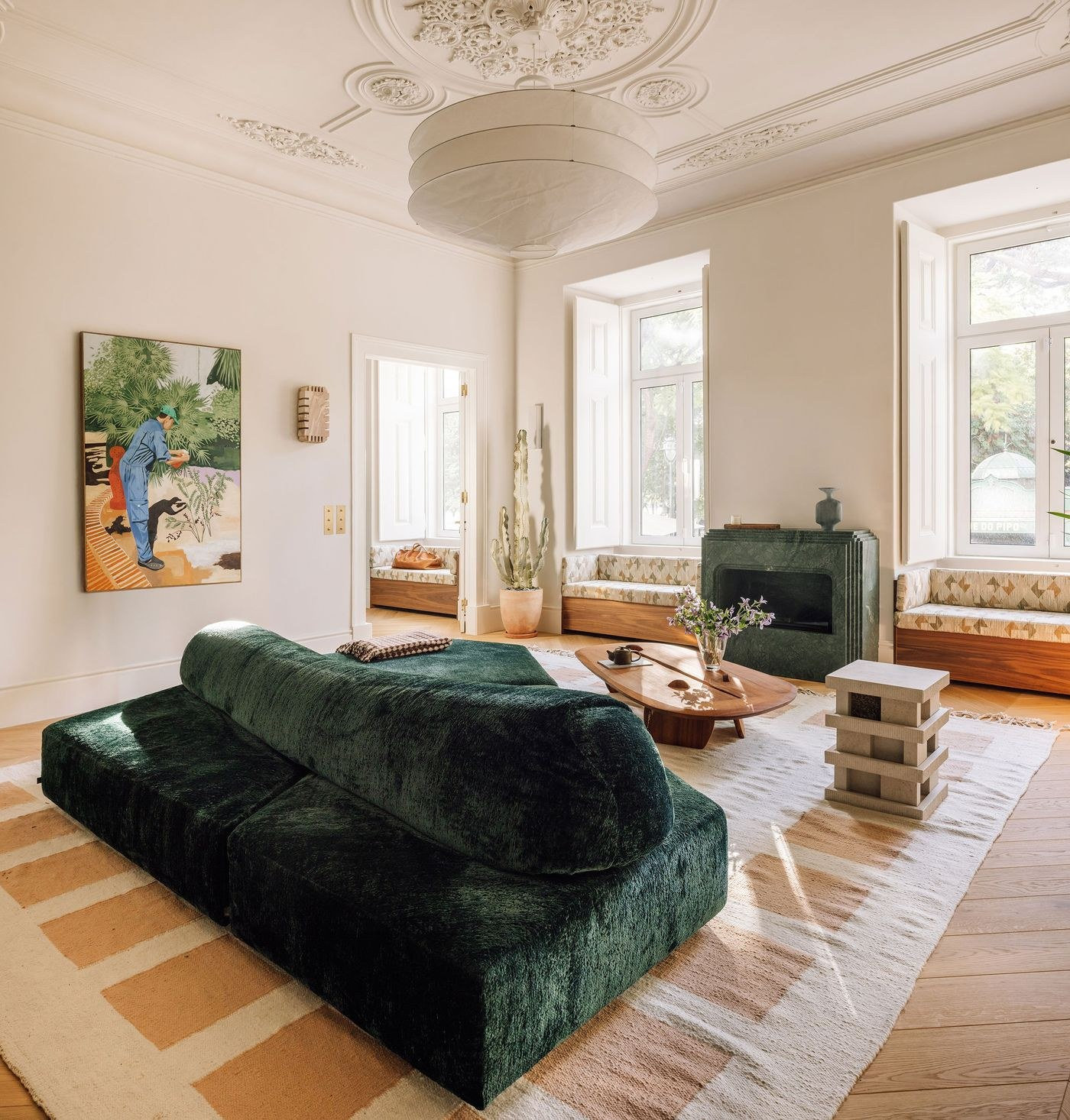
A Warm Monument, Lisbon, by Studio Mortazavi. Photo: Francisco Nogueira.

A Warm Monument, Lisbon, by Studio Mortazavi. Photo: Francisco Nogueira.

Source: Yatzer

Interiors and design: “A Warm Monument” — New York loft and Moroccan craft in Lisbon

In Lisbon’s Santos neighbourhood, designer Amir Mortazavi of Studio Mortazavi has furnished an apartment for a New Yorker who fell in love with the Portuguese capital and wanted a second, European home there. Restored plaster mouldings recall the building’s Lisbon heritage, while high ceilings and cast-iron columns evoke New York lofts. Against a backdrop of creams and natural timber, an intense green recurs, echoing the tree canopy of the nearby Largo de Santos.

The sitting room is dominated by Francesco Binfaré’s On the Rocks sofa for Edra in deep forest green, matched by a marble fireplace; nearby stand a pebble-shaped timber coffee table by Vasco Fragoso Mendes and Ingo Maurer’s Floatation pendant. In the dining room, a monumental table by Mircea Anghel combines an amoeba-shaped timber top with a boulder-like stone base.

The Moroccan thread comes from pieces by the Marrakech studio LRNCE — ceramics, mosaics and game boards set into tables — and from handmade zellige tiles by Beijmat Studio in the bathrooms. The project is called A Warm Monument; photographs are by Francisco Nogueira.

05

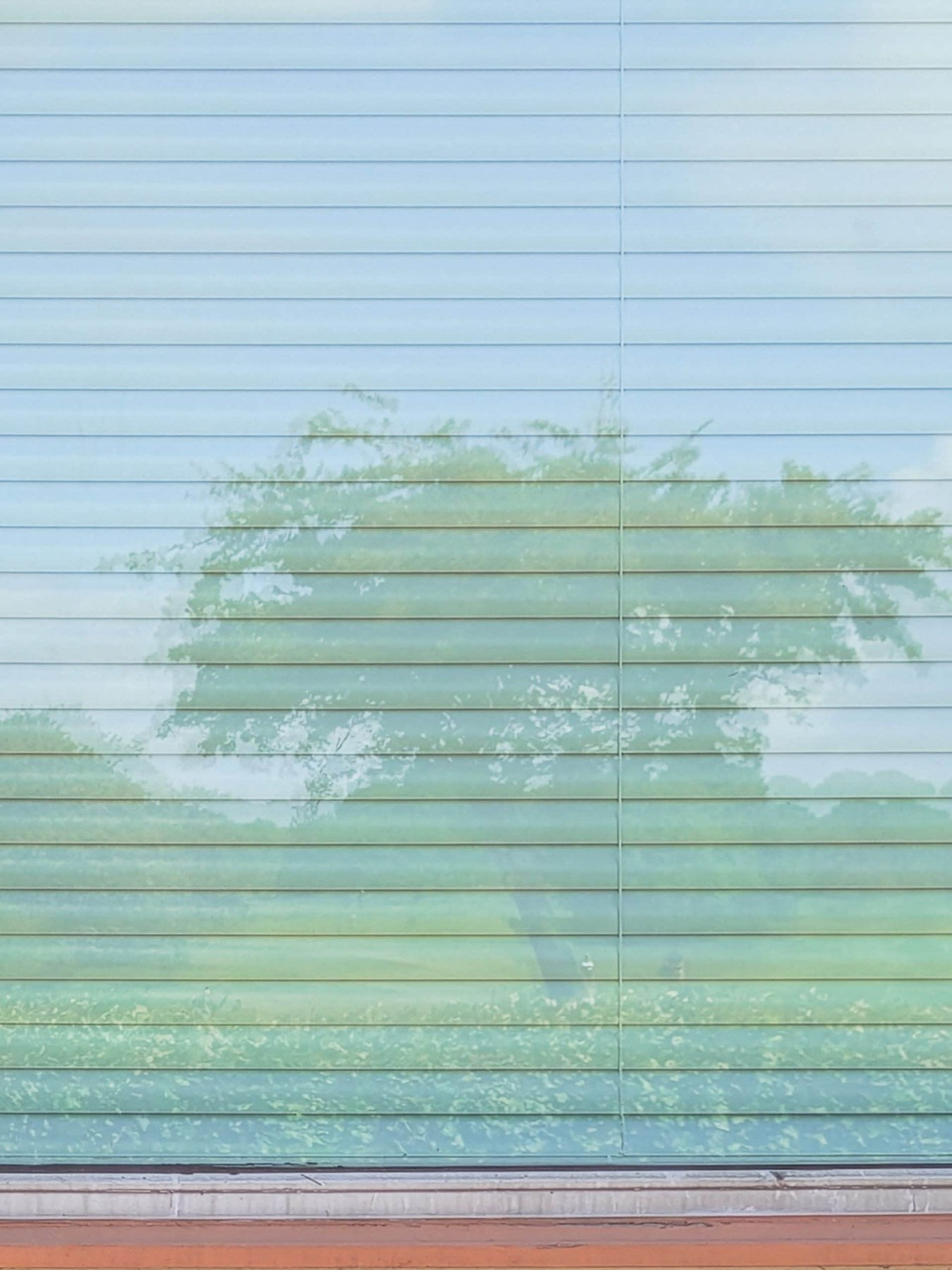
From Robby Ogilvie’s series “Acts of Attention”.

From Robby Ogilvie’s series “Acts of Attention”.

Source: C41 Magazine

Emerging visual trends: The smartphone as a tool for pausing — Robby Ogilvie’s “Acts of Attention”

A yellow cane cuts across concrete like a hand-drawn line, chairs stacked under transparent sheeting pose as a makeshift sculpture, and a fishing net filling the whole frame stops being a net and becomes a landscape. Robby Ogilvie’s series “Acts of Attention”, featured by the Milan-based magazine C41, was made entirely on a phone — a device associated with haste and an overproduction of images.

Here the smartphone is used to select rather than to record everything. Ogilvie looks at the “involuntary design” of the ordinary world: a tube drawing a line across the floor, metal stairs set against the geometry of paving, blue tarps and rust-coloured nets, a wooden bowl behind glass that looks like a museum exhibit. A shutter reflects a tree’s canopy until architecture and nature merge. The series draws its coherence not from a subject but from a method — looking long enough to interrupt automatism.

A selection of the work was shown at the Saatchi Gallery in London in the exhibition “Spotlight: Digitalism”, and the work “Holding Up the Sky” is part of the permanent collection of the Museum of the Avant-Garde in Milan.

06

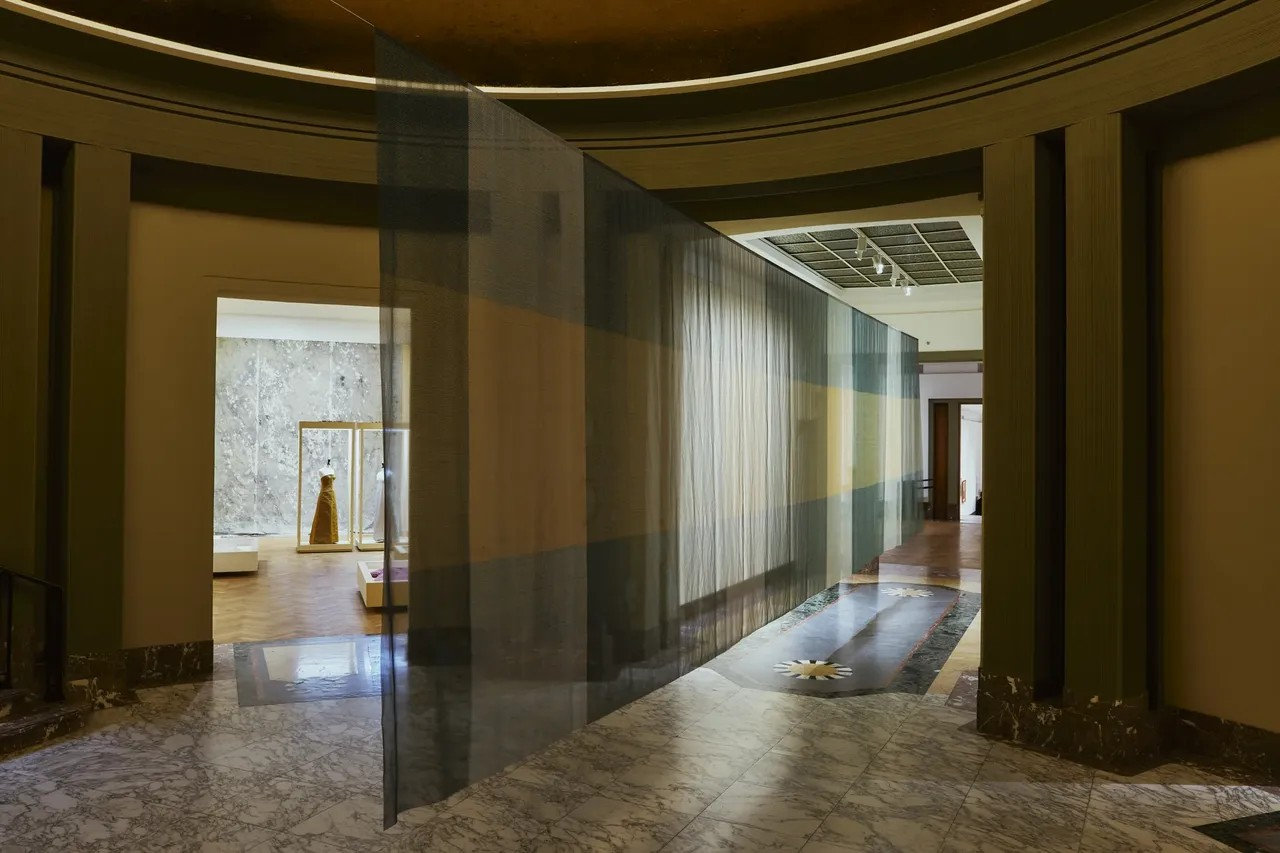
Edith Dekyndt’s veil in the Rotonde Royale, Bozar, Brussels. Photo: Barth Decobecq.

Edith Dekyndt’s veil in the Rotonde Royale, Bozar, Brussels. Photo: Barth Decobecq.

Source: METAL Magazine

Art and fashion: The fabric decides — Edith Dekyndt in the Balenciaga archive

Brussels’ Bozar is pairing Belgian artist Edith Dekyndt (b. 1960) with the archive of Cristóbal Balenciaga for the first time. The exhibition “The Fabric Decides”, on view until 31 January 2027, brings together around fifty works by Dekyndt, including thirty never shown before, and more than thirty objects from the Maison Balenciaga archives: sketchbooks, notebooks, textile samples, garments and accessories.

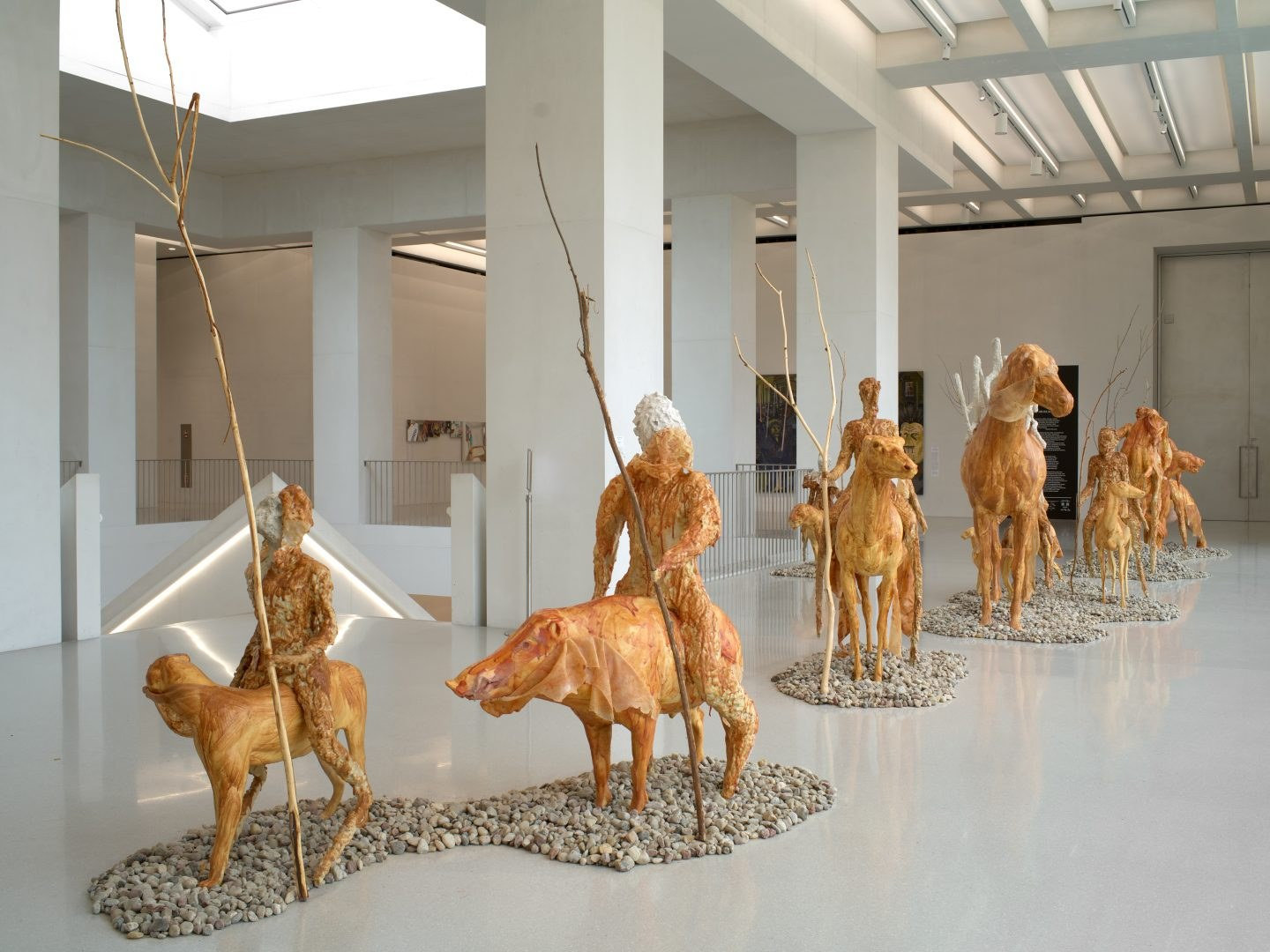
What unites them is the conviction that material is not a passive medium. Since the mid-1980s Dekyndt has worked with barely noticeable phenomena — a change of colour, a deposit, a trace of humidity, light or time — letting processes co-create the work. During his Paris years, from the 1930s to the 1960s, Balenciaga built silhouettes out of the qualities of silk, wool and lace, more like a sculptor than a tailor. The artist visited the house’s archive several times; she was moved by the silent presence of bodies, still perceptible in the folds, tensions and distortions of the fabrics.

The exhibition occupies three spaces. In the Rotonde Royale visitors are greeted by Dekyndt’s monumental veil, inspired by a textile sample from the Balenciaga archive; further on, the artist’s working process meets the couturier’s experiments, and in yet another the garments, bearing traces of wear, take centre stage.