28

[ DAILY ] · BB–D–261128

28 November 2026

Saturday, 28 November 2026 / 6 stories

Art, interiors, photography, designers

01

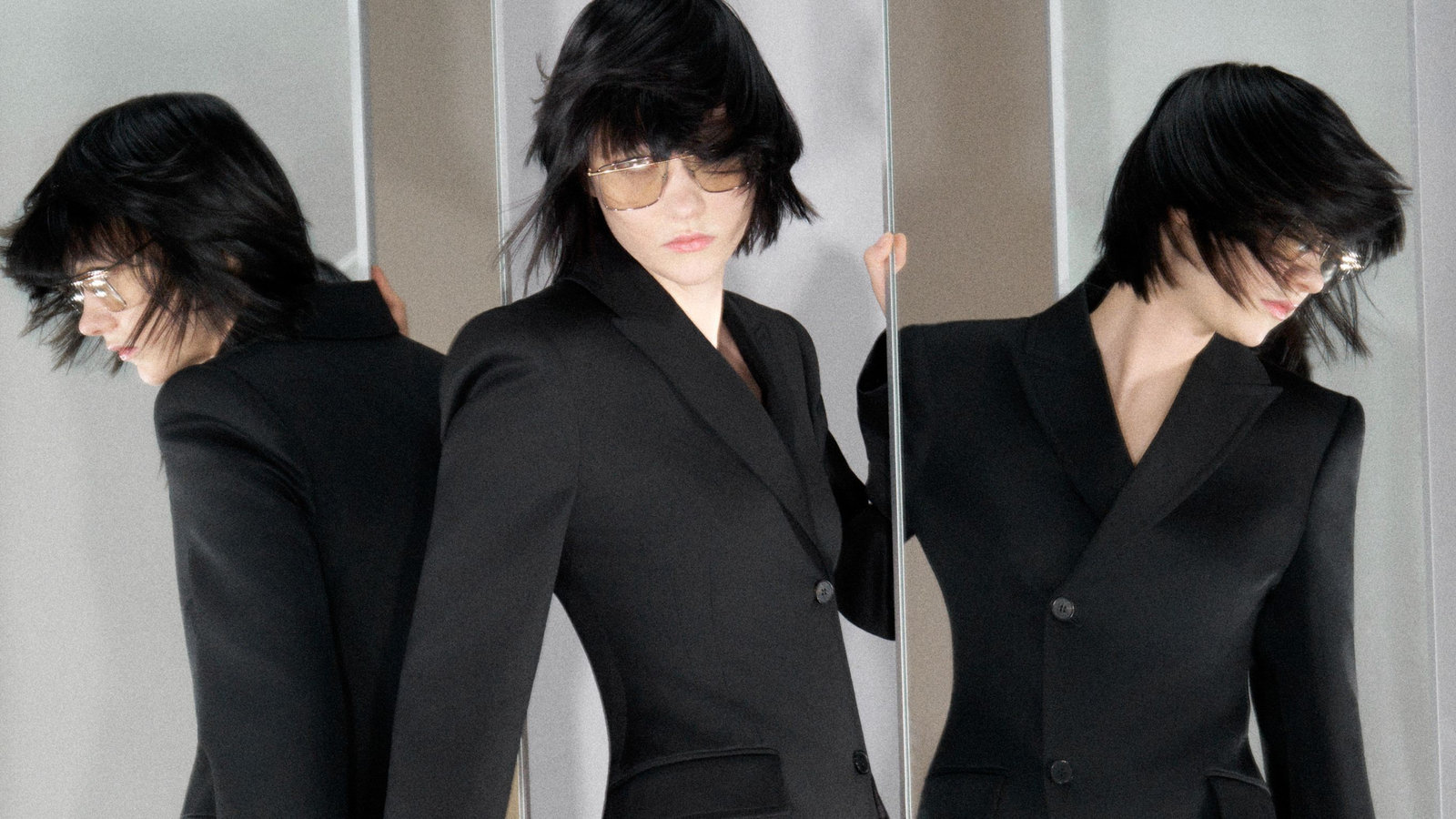
McQueen Pre-Fall 2027 lookbook: black tailoring on three models.

McQueen Pre-Fall 2027 lookbook: black tailoring on three models.

Source: Vogue Runway

Fashion and designers: McQueen without a creative director — the studio looks into the mirror of the archive

McQueen’s pre-fall 2027 collection was made during an interregnum: after the departure of Seán McGirr and before his successor has been announced. The studio team treated the house codes as a mirror — each member focused on their own specialism, while the whole was meant to stay coherent. The aim, as Luke Leitch writes in Vogue Runway, was sophistication stimulated by visceral twists and visual misdirection.

The glossy “croc leather” of a pair of trousers turns out to be denim with a raised pigment print. A brown jacquard with a subtle snake pattern recalls British countrywear, and a suit is cinched by a leather harness just below the bust. The spider lace from Alexander McQueen’s 1994 Banshee collection returns as an openwork jacquard of cotton backed with silk, and a fitted dress in metallic jacquard, based on a laser-cut lace from spring 2012, has a grille of serrated-edged rib cage cutouts on the back.

The lookbook closes with a full-skirted strapless gown in lacquered black lace. Corset lacing carries over to boots and pumps, and some pumps are adorned with spathes of glossy leather shaped with metal threads into calla lilies — the flower also returns in embroidery and print, pink on a red gradient.
02

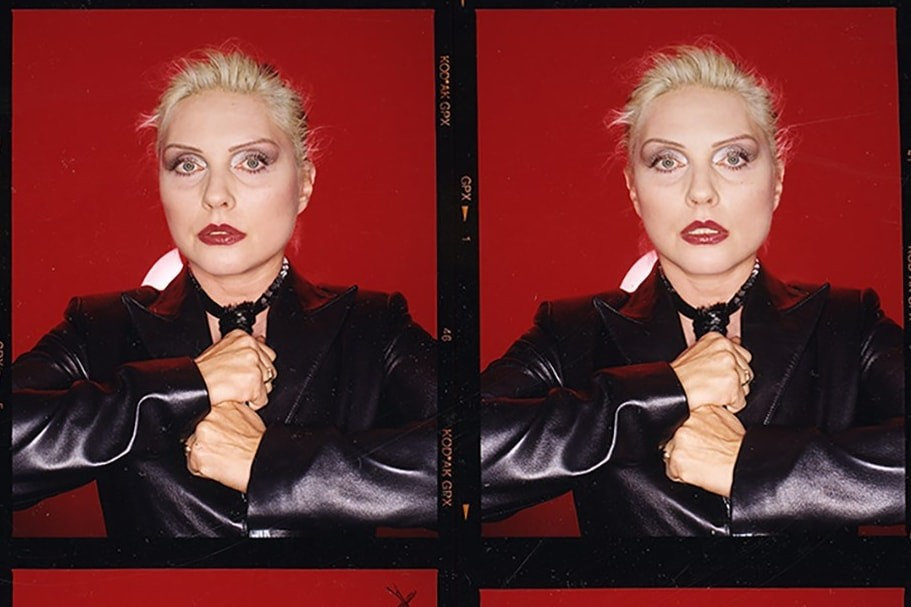
A red-ground contact sheet from Rankin’s book Contact.

A red-ground contact sheet from Rankin’s book Contact.

Source: Dazed

Photography: Rankin opens up his contact sheets — “Contact” as proof of the 90s

Dazed co-founder and photographer Rankin is releasing the book “Contact”, a collection of contact sheets from his most famous shoots. The trigger was an essay he wrote in May, “The Absurdity”, about working with generative AI — and the conclusion that what he loves most in photography is being in a room with another person. The title plays on several meanings: contact means touch, and contact sheets are also called “proofs” — in a post-truth world, something worth holding on to.

Rankin left film for digital exactly 20 years ago. Now he has dug through an archive of “14 filing cabinets” and opened envelopes untouched for decades: unpublished frames of Madonna, Eminem and Björk. In many of the pictures the sitters touch the lens — he asked them to imagine they were looking through a window into the future. Next to the Björk portraits there are red crosses, probably in her own hand; no retouching, no post-production.

The conversation also goes back to the early days of Dazed with Jefferson Hack and the team of Katie Grand, Katy England, Alister Mackie and Phil Poynter. “We felt like we were part of the resistance,” Rankin says. The book is accompanied by exhibitions at Annroy Studio in London’s Kentish Town (from 2 December) and at House of Photography in Stockholm (from 3 December), both until 2 February 2027.

03

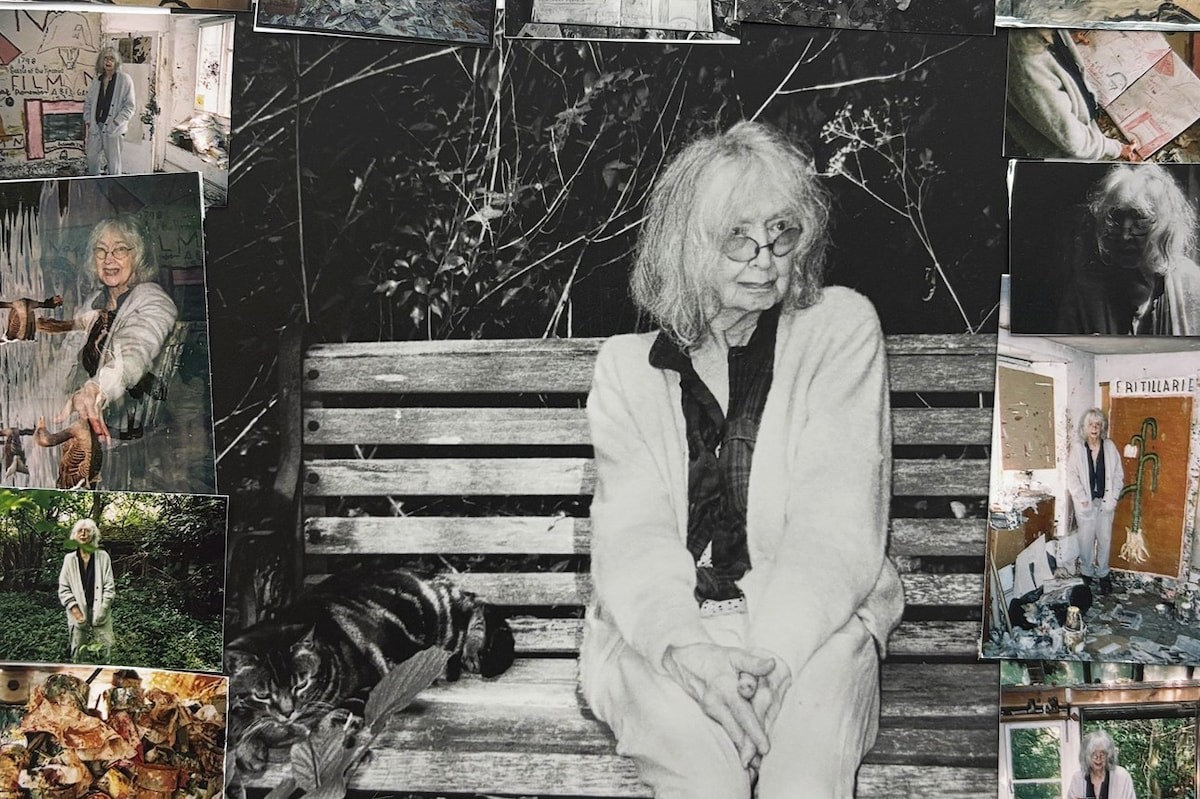
Rose Wylie photographed by Sam Khoury for AnOther.

Rose Wylie photographed by Sam Khoury for AnOther.

Source: AnOther

Contemporary art: Rose Wylie paints “Napoleon” — what matters is how things look

Rose Wylie is 91 and lives in rural Kent, in a house and studio full of monumental canvases. She paused her career to raise three children and returned to it after studying at the Royal College of Art, from which she graduated at 47; international acclaim came in her seventies. This year she became the first woman painter in history to have a major solo exhibition in the Main Galleries of the Royal Academy of Arts.

Wylie draws on everyday life and the media: celebrities, sport, childhood memories, anime and art history. In her “Film Notes” series she transfers scenes from films watched at home — “Kill Bill”, “Thelma & Louise” and Ridley Scott’s “Napoleon” — onto large canvases. In a piece from the Autumn/Winter issue of AnOther, published for the magazine’s 25th anniversary, she says that what stayed with her from the film were the guillotine, the pyramid and Joaquin Phoenix’s “flattering” hat.

Most important is her credo: the story doesn’t interest her, what matters is the look — the surface, the quality of the line and the paint, the juxtaposition of images, differences of scale and contrast. Beauty, she argues, has dropped out of conversations about painting, but it is always there in nature. The portraits of the artist were taken by Sam Khoury.

04

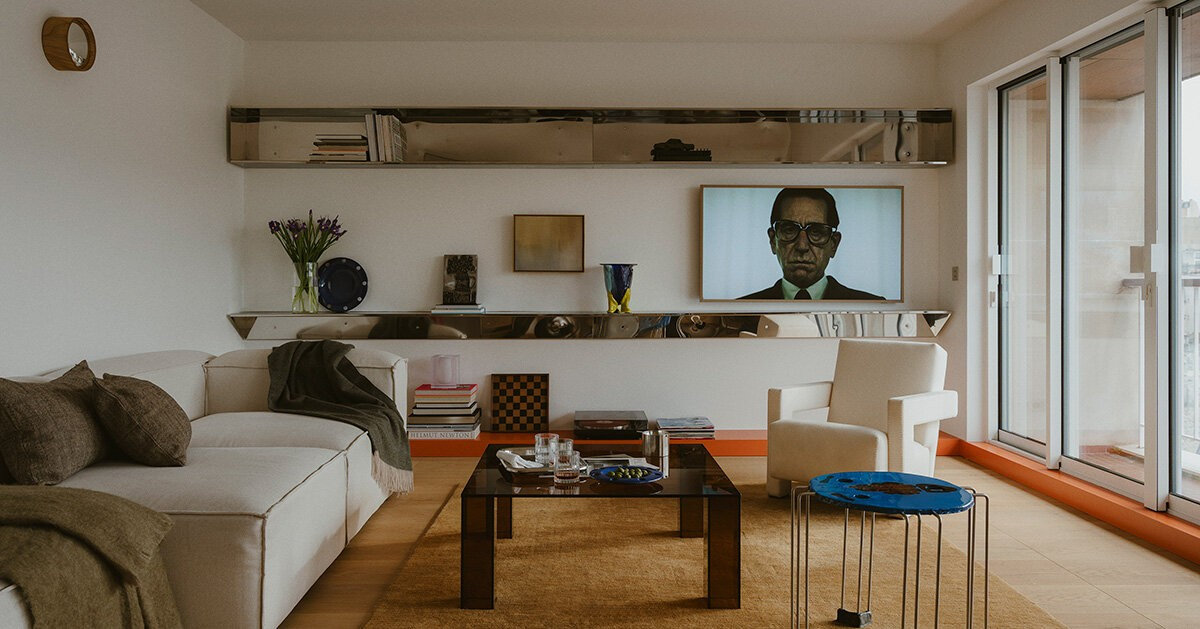
Living room of Acte Deux’s Gran Turismo apartment in Paris.

Living room of Acte Deux’s Gran Turismo apartment in Paris.

Source: designboom

Interiors and design: Gran Turismo — a Paris apartment like the interior of a 1960s car

Paris studio Acte Deux, run by Johanna Lapray and Hugo L’ahélec, has remodelled a 65-square-metre apartment on the tenth floor of a 1960s concrete block in the 18th arrondissement. The project, named Gran Turismo, draws on the streamlined bodywork and richly finished interiors of grand touring cars of that decade. Rather than fighting the standard ceiling heights, the architects arranged the living area as a horizontal sequence along the facade, with views of the rooftops around Sacré-Cœur.

The base is whites, creams, browns and oak; expression comes from lacquered surfaces in garnet, orange and blue. An orange lacquered ribbon runs around the oak parquet like a pinstripe on a car body, two horizontal sheets of polished metal recall a radiator grille, and a blue lacquered table sits with vintage chairs and a painting by Hervé Priou. In the kitchen, matte lacquer meets a Travertino Rosso worktop, and a curved beige cabinet with round “portholes” separates the rooms.

In the bathroom, stained wood, bronze lacquer and checkerboard tiles evoke a racing flag; an orange corridor leads to the bedroom. Photos: Jean-Baptiste Thiriet.

05

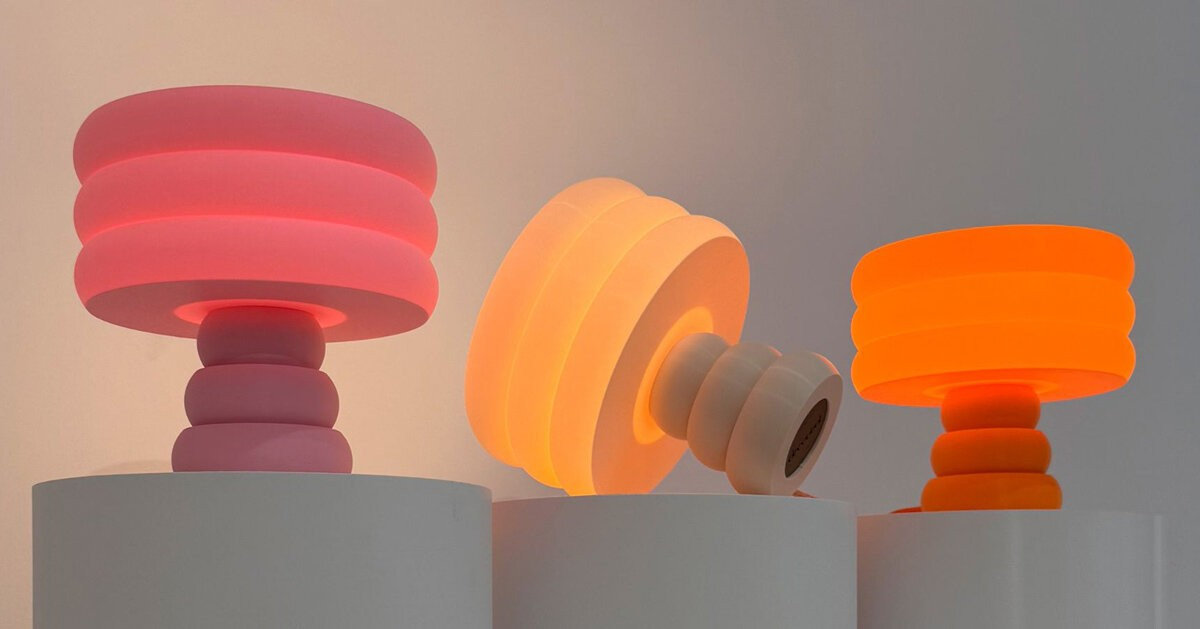
Chubby lamps by Decadent Studio in pink, peach and orange.

Chubby lamps by Decadent Studio in pink, peach and orange.

Source: designboom

Emerging visual trends: Lamps like desserts — “Chubby” by Decadent Studio

Galician Decadent Studio, an independent design practice from north-western Spain, has presented its first lighting collection. The Chubby table lamps are inspired by desserts — pavlova, cherry pie and tangerine ice cream — and the designers use them to explore the relationship between food, design and desire. The shape is rounded, generous in proportion and made of soft curves.

Each colour comes from a different dessert and gives the lamp its name: Cotton Candy in pastel pink turns warm coral when lit, Classic Pavlova references meringue, Cherry Pie has a deep burgundy tone, Tangerine Ice Cream an intense orange, and Buttercream glows softly and warmly. Switched off, the lamp is a sculptural object; switched on, its colour changes character.

The lamps are made to order in Galicia from a recyclable plant-based biopolymer, which limits overproduction; each one is numbered and comes with a certificate of authenticity, and the textile cable is colour-matched to the shade. The project reached designboom through its open reader submissions. It is a clear example of a sweet, “edible” aesthetic in design — the objects are simply meant to give pleasure.

06

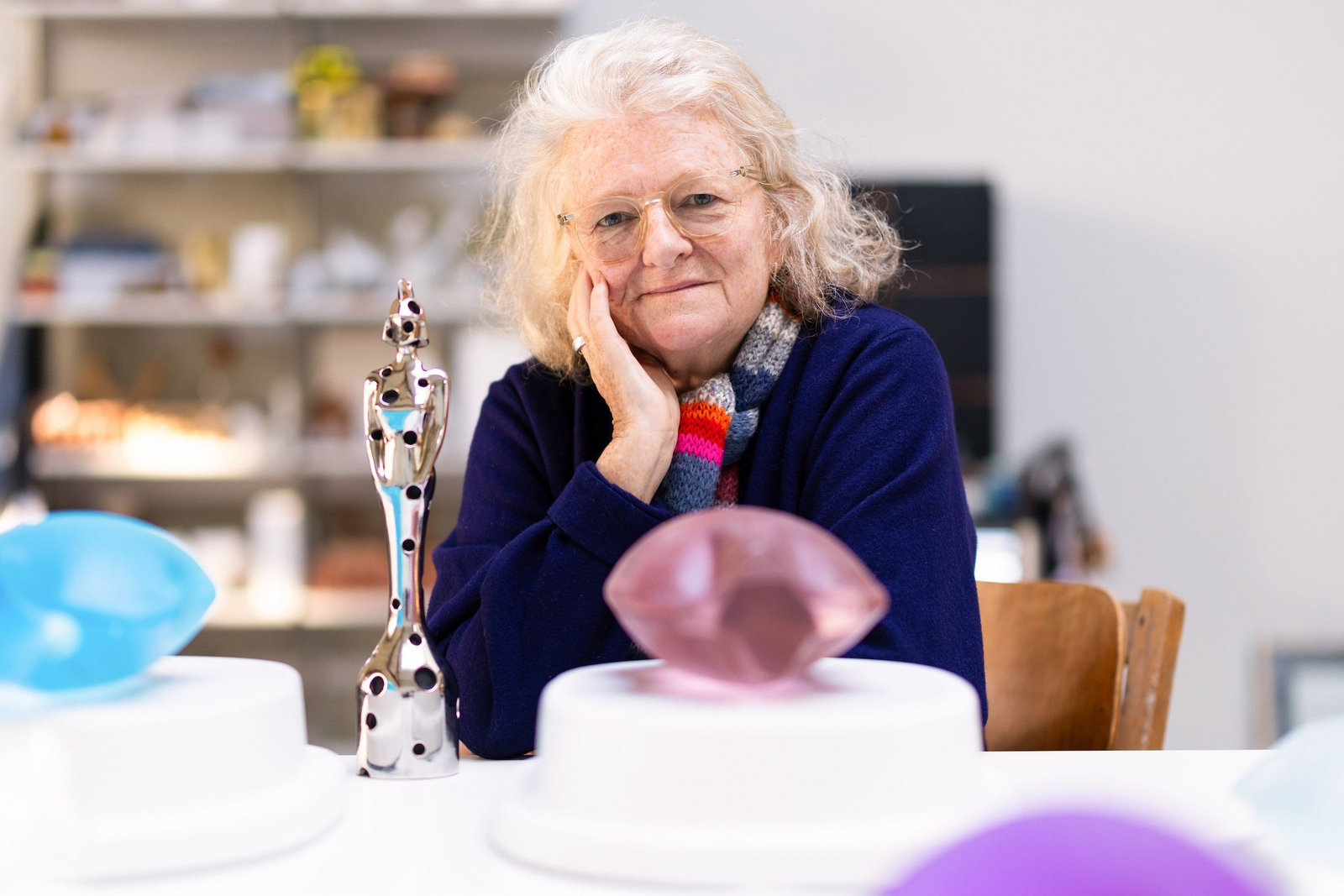
Rachel Whiteread with her Brit Awards 2027 trophy.

Rachel Whiteread with her Brit Awards 2027 trophy.

Source: Wallpaper*

Art and design: Rachel Whiteread punctures Britannia — the new Brit Awards statuette

Rachel Whiteread has designed the Brit Awards 2027 statuette; the ceremony takes place on 27 February at Manchester’s Co-op Live. Every year the trophy is a new interpretation of a stylised Britannia, and the artist wanted to “expose the interior of the statue, as an artist would do with their music”. The chrome surface is interrupted by black holes — the hole is a recurring motif in her work, used to explore negative space in photography and sculpture. In 2014 she treated the London Tube map in a similar way, with holes forming a trompe-l’oeil layer that revealed the map.

Whiteread casts everyday objects and architectural elements in plaster, concrete, resin, rubber and metal, bringing out what usually goes unseen. She was the first woman to win the Turner Prize (1993), and in 1997 became the first woman to represent Britain at the Venice Biennale. Her works include the Holocaust Memorial (Nameless Library) in Vienna and a concrete cast of a Nissen hut in Dalby Forest.

She joins a roster of trophy designers that includes Yinka Ilori, Es Devlin, Zaha Hadid and Tracey Emin. “Art and culture are under very real threat,” she says, explaining why she accepted the invitation.