27

[ DAILY ] · BB–D–261127

27 November 2026

Friday, 27 November 2026 / 6 stories

Art, interiors, photography, designers

01

Jewellery like a cabinet of curiosities — eight workshops from Sarabande.

Jewellery like a cabinet of curiosities — eight workshops from Sarabande.

Source: AnOther

Fashion and designers: Jewellery like a cabinet of curiosities — eight workshops from Sarabande

The Sarabande Foundation, founded in 2006 by Lee Alexander McQueen to give young makers space and time, is showing a new survey of art jewellery in London. The exhibition is at 40 Duke — a members’ club at Selfridges, where mirrored walls and velvet furniture make the room feel like the inside of a jewel box. The works are available at House of Bandits, the foundation’s gallery; proceeds return to the artists and to future residents.

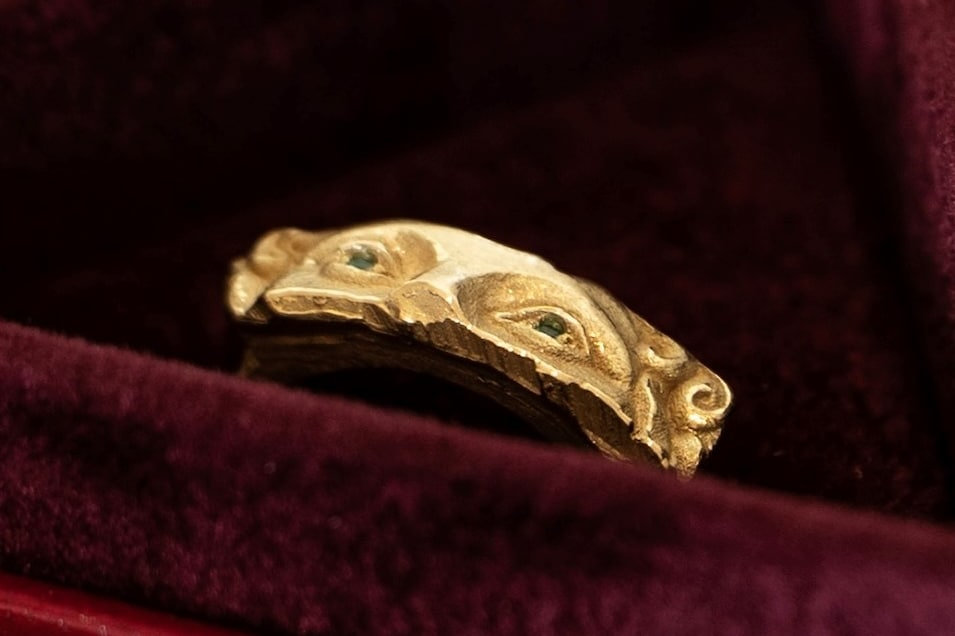
Eight jewellers look for beauty in unexpected places. Castro Smith carves signet rings using seal-engraving techniques, and the story runs around the band and into its interior — wolves, ravens, dragons and snakes from his dreams. Joy BC cuts and collages classical faces, setting emerald pupils in yellow gold. Jet McQuiston, in the Fallen Flora collection, captures 70 extinct plants in enamel; Martina Kocianova cuts chanterelles from citrine and “portable kisses” from semi-precious stones; and Megan Brown weaves metal as thin as thread until it resembles lace.

This is reliquary jewellery: half herbarium, half excavation artefact, very close to a camp-nostalgic imagination. The showing at 40 Duke Street runs until 29 November.
02

Prissilya Junewin and a “first time” in the country of her ancestors.

Prissilya Junewin and a “first time” in the country of her ancestors.

Source: i-D

Photography: Prissilya Junewin and a “first time” in the country of her ancestors

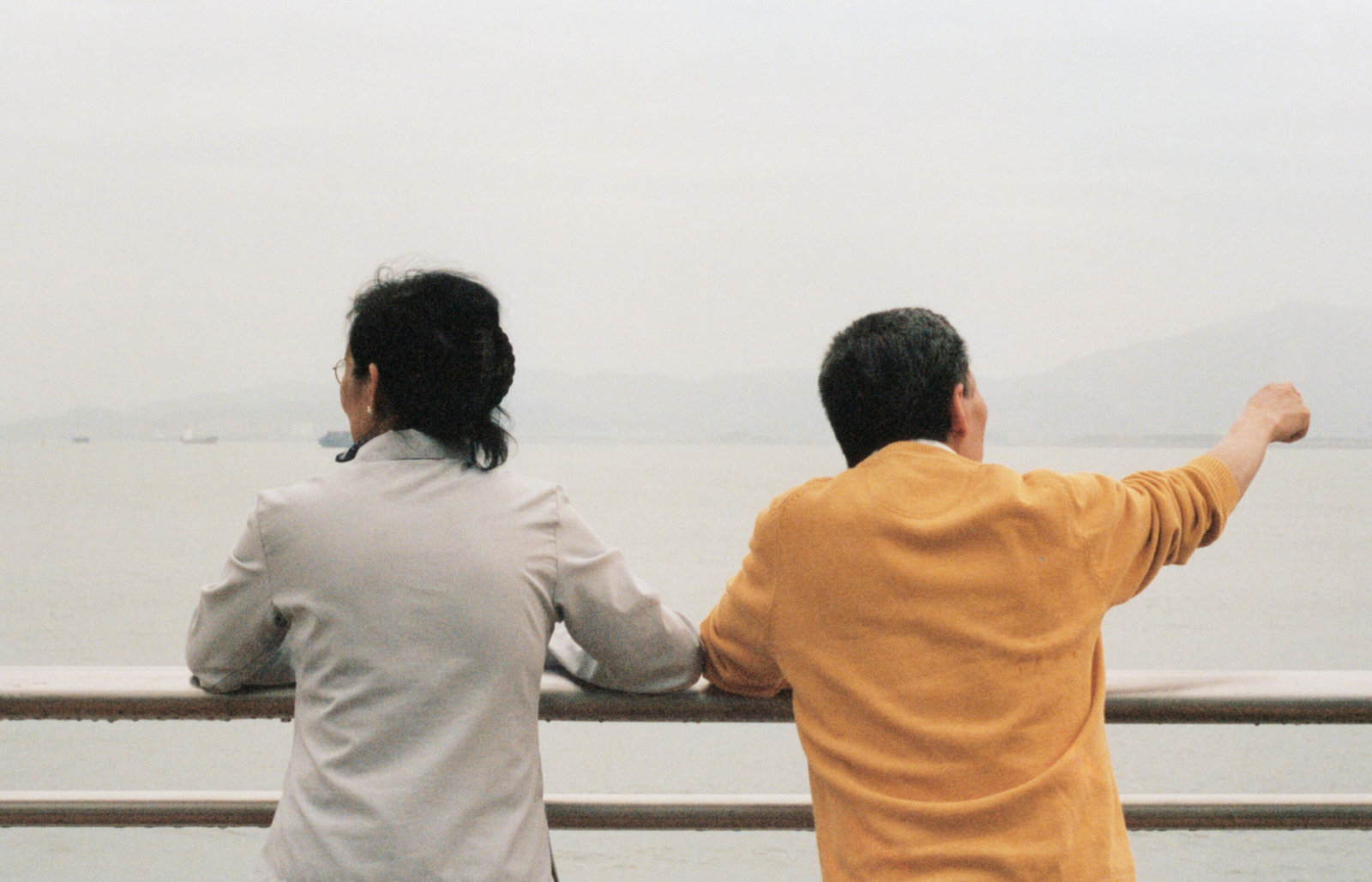
“第一次 First Time” is a new photobook by Prissilya Junewin, a Chinese-Indonesian photographer born in Makassar and raised in Kaiserslautern, Germany. A self-taught artist who began with pictures inspired by “Tumblr’s golden age” and turned professional in 2021 after studying mathematics, she describes in it her first independent journey to China and a second trip, a year later, already with her parents.

In a conversation with i-D she talks about a home made of many languages — she spoke German with her sister, Indonesian with her parents, while her parents spoke Mandarin to each other — and about a family that, under Suharto’s rule, had to conceal its Chineseness. The first trip lasted seven weeks; what surprised her most was how often she recognised her own parents’ gestures in strangers.

The pictures include intimate portraits, tender everyday scenes and wide landscapes in a misty, soft light. The book was printed in Shanghai using only Chinese materials; it is the first album Junewin funded and published herself, working with collaborators in Tokyo and Paris.

03

Rita Ackermann’s puppets return after thirty years.

Rita Ackermann’s puppets return after thirty years.

Source: i-D

Contemporary art: Rita Ackermann’s puppets return after thirty years

In 1996 Rita Ackermann — the Budapest-born painter whose almond-eyed girls became a symbol of 1990s downtown New York — was meant to sing at the launch of her record on Thurston Moore’s Ecstatic Peace! label. Instead, to avoid her first vocal performance, she staged a puppet theatre. That show, “Vivre Sa Vie”, now returns as an exhibition at Galerie Allen in Paris.

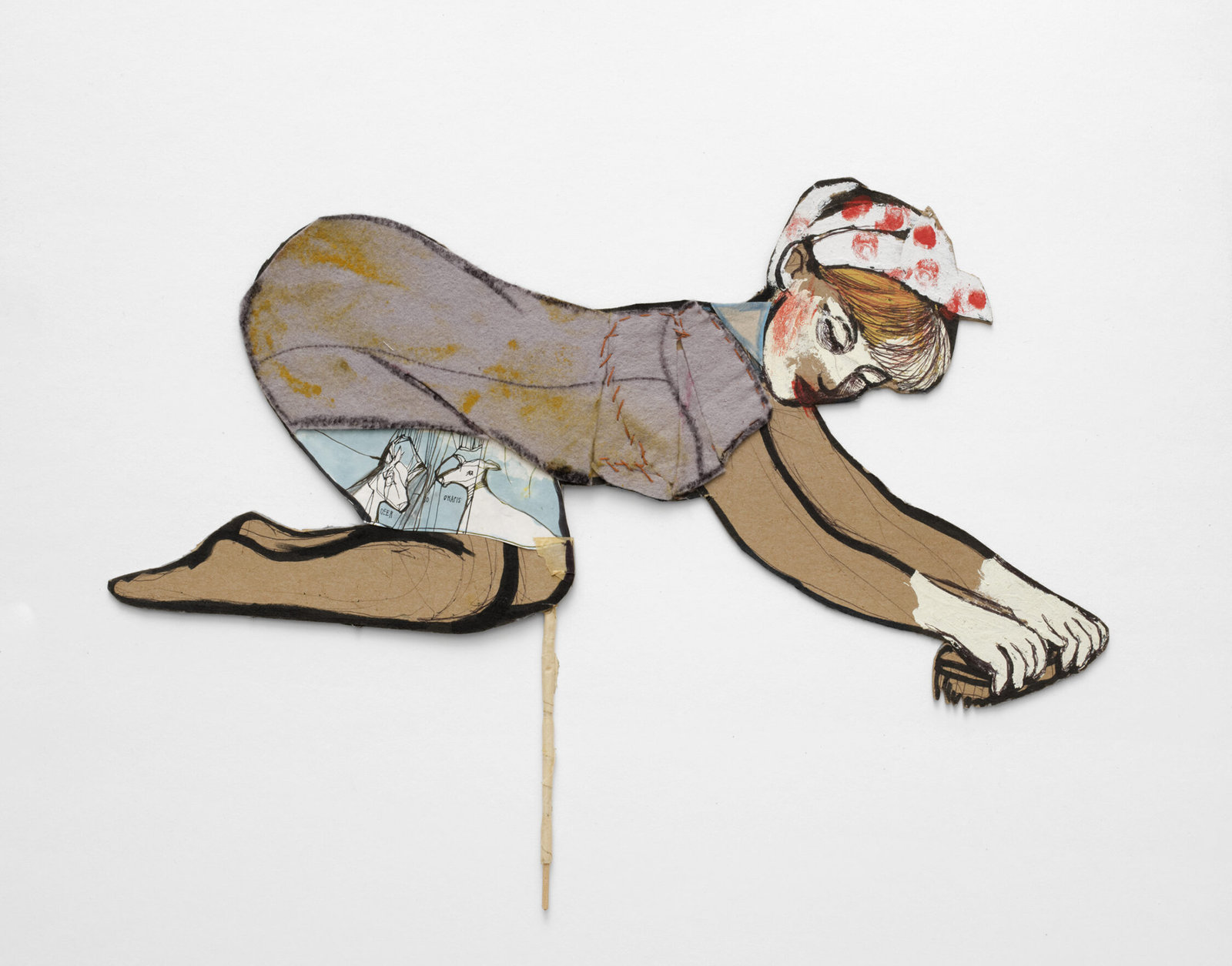
At the centre of the gallery stands a hexagonal little theatre surrounded by 22 puppets dressed, among other things, as nurses and waitresses. The title comes from Godard’s 1962 film with Anna Karina, but Ackermann’s heroine “corrects” Nana’s lost path: she gives herself over to the service of others, increasingly on her own terms. In the original presentation Kim Gordon was the narrator, members of the No-Neck Blues Band made the sound, and the miniature costumes were sewn by designer Susan Cianciolo, who shared a loft with the artist on Canal Street.

The flat, cardboard figures in hand-sewn clothes are pure 1990s archival magic — though Ackermann herself says she has no sentiment for the past, and that the exhibition format finally lets each element be looked at closely.

04

Caffè Fortuna — Milanese modernism in walnut and green, in Taipei.

Caffè Fortuna — Milanese modernism in walnut and green, in Taipei.

Source: Yatzer

Interiors and design: Caffè Fortuna — Milanese modernism in walnut and green, in Taipei

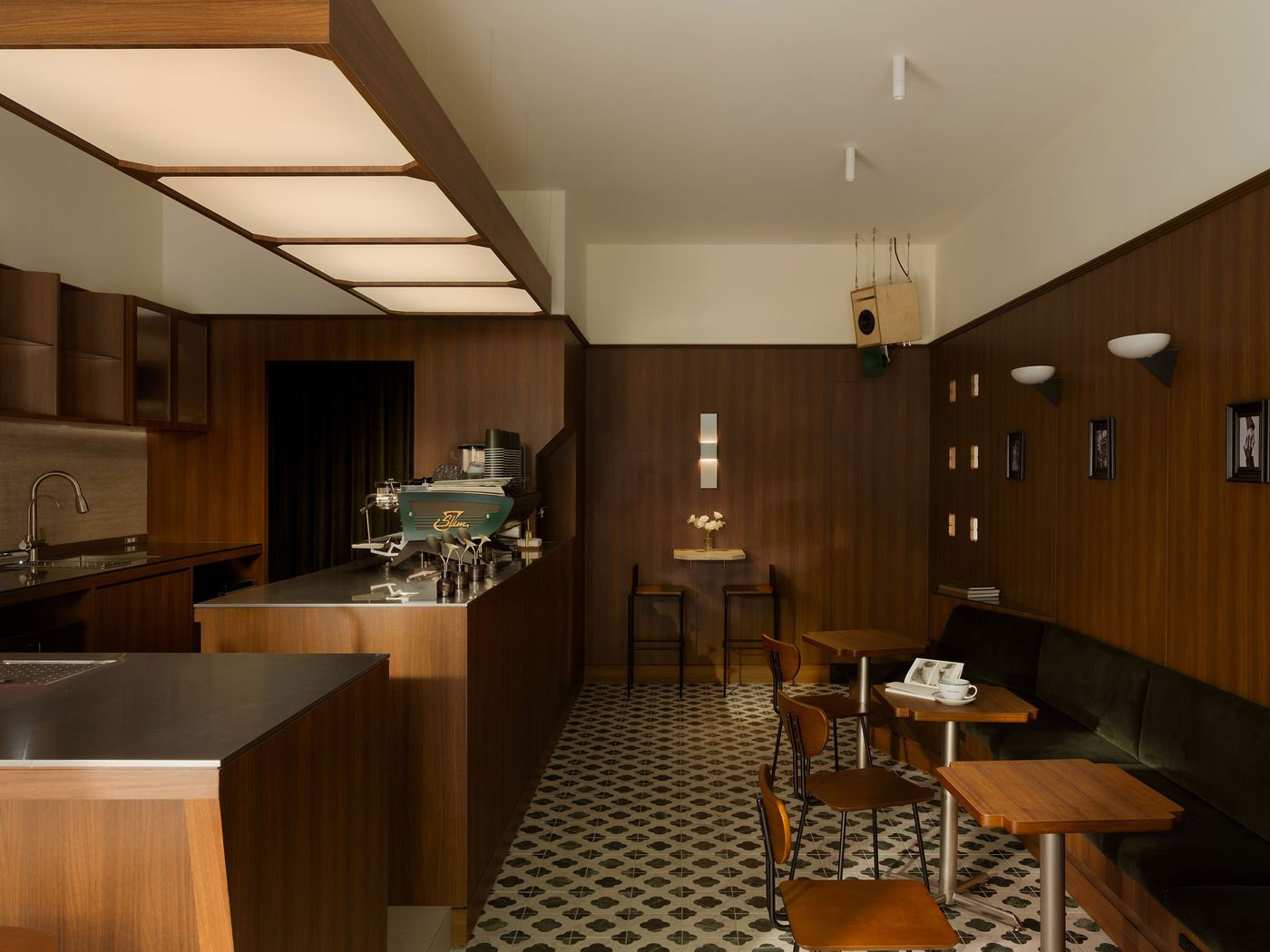
In Taipei’s Dazhi district, studio RLWW (Ray Liang and Gary Tsai) designed a café for an Alfa Romeo enthusiast. Instead of motoring gadgets, the designers reached for postwar Milanese modernism and a single symbol: the quadrifoglio, the four-leaf clover that driver Ugo Sivocci painted on his car in 1923 before winning the Targa Florio. Hence the name — “fortuna” is Italian for luck.

The compact interior is wrapped in walnut panelling and made-to-measure cabinets and counters, set off by bottle-green velvet banquettes, steel tops and pale stone. Above the bar hangs a wooden lamp of geometric, glowing panels; there are also mid-century-spirited plywood chairs and black-and-white photographs. The clover appears at varying degrees of abstraction: in a door handle, façade reliefs, a green-and-cream floor and cut-outs in the counters, while a side window is screened by walnut shutters with six openings in its shape.

Outside: a walnut façade, a green awning, glass blocks and white café curtains like those of a European coffee house. Yatzer stresses that the interior never becomes “thematic”: you do not have to recognise the references in order to enjoy them.

05

A soft, wet future — Lucy McRae designs “birth bags” for Blade Runner 2099.

A soft, wet future — Lucy McRae designs “birth bags” for Blade Runner 2099.

Source: Dezeen

Emerging visual trends: A soft, wet future — Lucy McRae designs “birth bags” for Blade Runner 2099

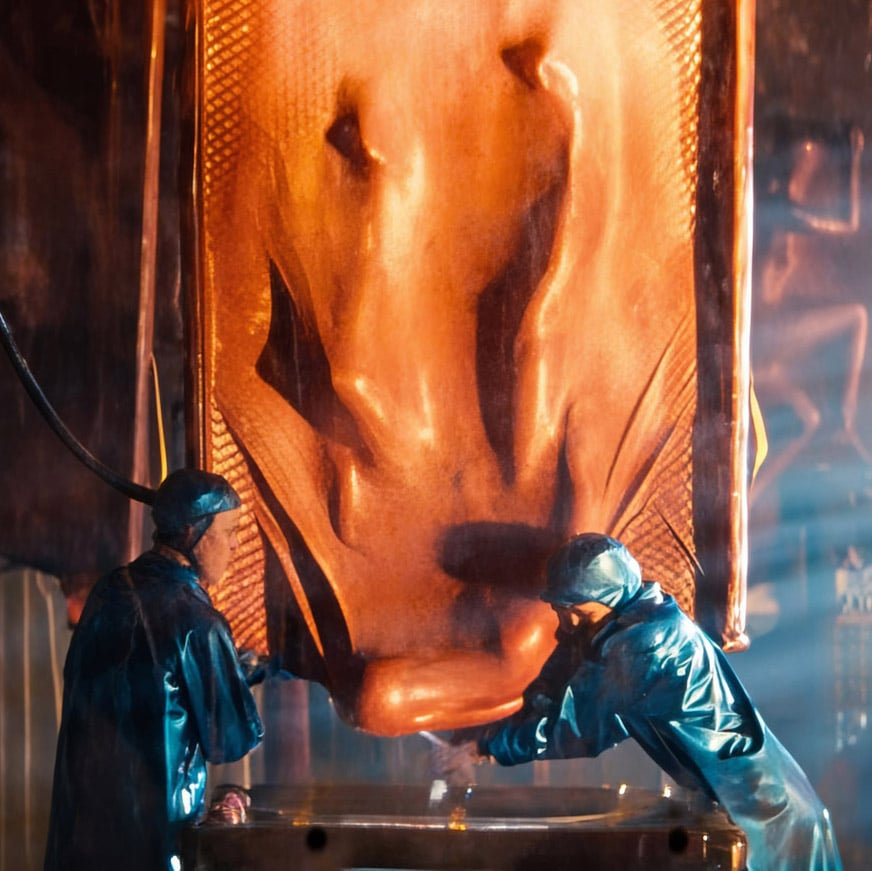
The series “Blade Runner 2099”, which debuted on Wednesday on Amazon Prime with Hunter Schafer and Michelle Yeoh, leaves behind the cool, metallic aesthetic of the franchise. Lucy McRae, a Los Angeles artist who calls herself a “body architect” and was engaged in 2022 as the production’s official futurist, is among those responsible.

McRae designed the incubator-like “birth bags” in which replicants are born or transformed, as well as a nursery room, a birth system and a traction machine with a polymer skin for treating the heroine. The bags are a new version of her Compression Cradle — a machine that delivers a simulated embrace, shown in 2019 in the Broken Nature exhibition at the Triennale di Milano; nine vertical examples were made for the series in the Tyrell building. She also developed a materials and colour palette for the replicants: tubing, quilting, industrial plastics.

It is a welcome sign of a wider turn: technology shown as folds, wrinkles and soft, “squeezable” textures instead of chrome. According to McRae, that tactility brings femininity into the world of Blade Runner — “violence and femininity coexist”.

06

Kanal — a 1930s Citroën garage becomes a museum on a European scale.

Kanal — a 1930s Citroën garage becomes a museum on a European scale.

Source: Dezeen

Architecture and art: Kanal — a 1930s Citroën garage becomes a museum on a European scale

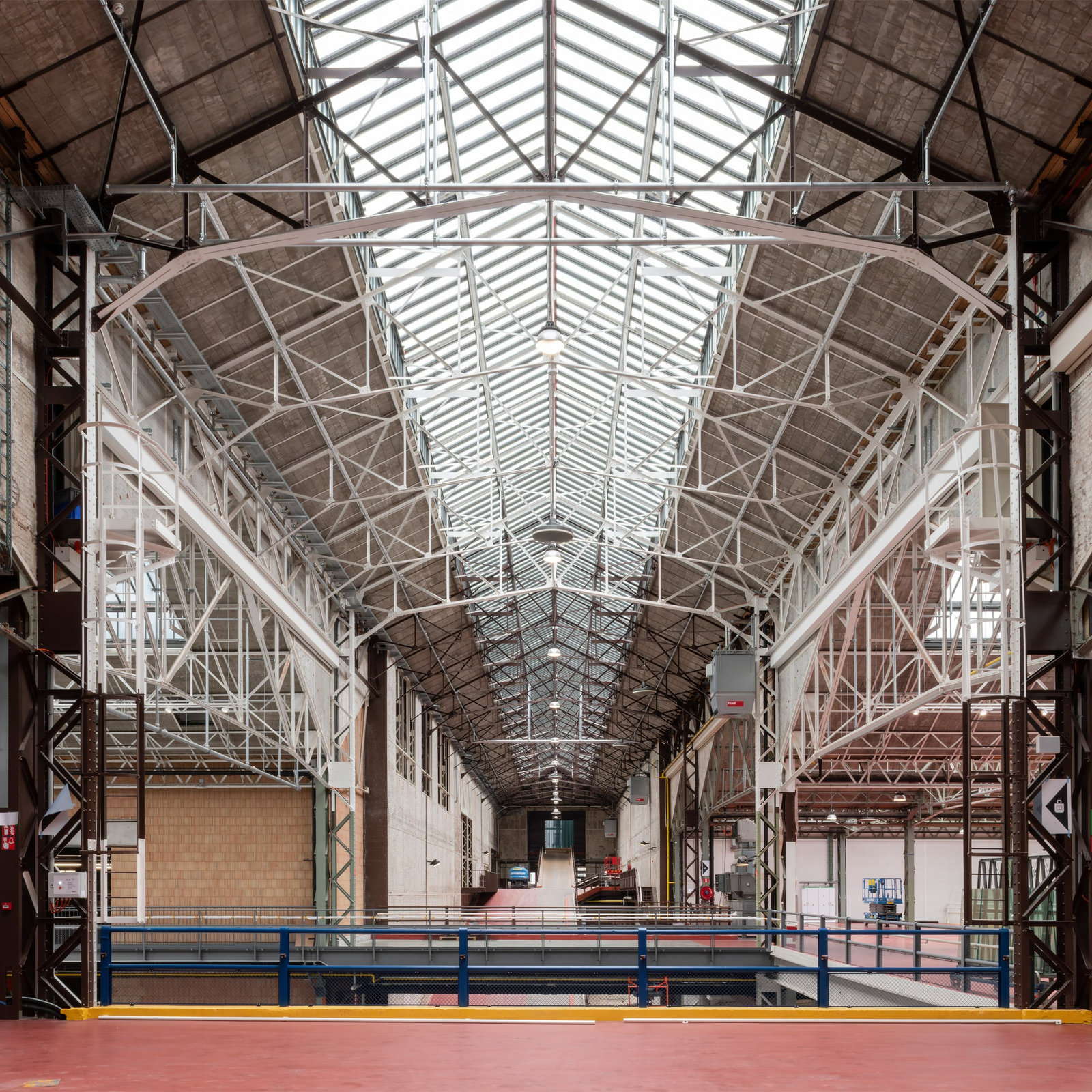
Tomorrow, 28 November, Kanal opens to the public in Brussels — 40,000 m² of space for modern art and architecture, with an exhibitions programme developed together with Paris’s Centre Pompidou. The institution describes itself as “the largest museum investment in Europe”. It occupies a canal-side building from 1934, originally raised as a Citroën garage and showroom.

The conversion was designed by Atelier Kanal — a consortium of EM2N, NoAarchitecten and Sergison Bates Architects. Instead of a spectacular gesture they chose a “light touch” and “radical optimism”: they restored the industrial structure and turned the former showroom — a modernist, curved glass volume with a 20-metre-high interior — into a gallery with an accessible roof. Inside the hall stand three new volumes: galleries, a 378-seat auditorium with offices, and a nine-storey home for Kanal Architecture (formerly CIVA), with an archive and library.

The collective Assemble designed a playground inspired by volcanoes, planets and the coal barges that once floated on the canal. Steel trusses and skylights create a cathedral-like, raw scenography here — ideal for contemporary art.