23

[ DAILY ] · BB–D–261123

23 November 2026

Monday, 23 November 2026 / 5 stories

Art, interiors, photography, designers

01

Iris van Herpen: “We are small ecosystems”.

Iris van Herpen: “We are small ecosystems”.

Source: designboom

Iris van Herpen: “We are small ecosystems”

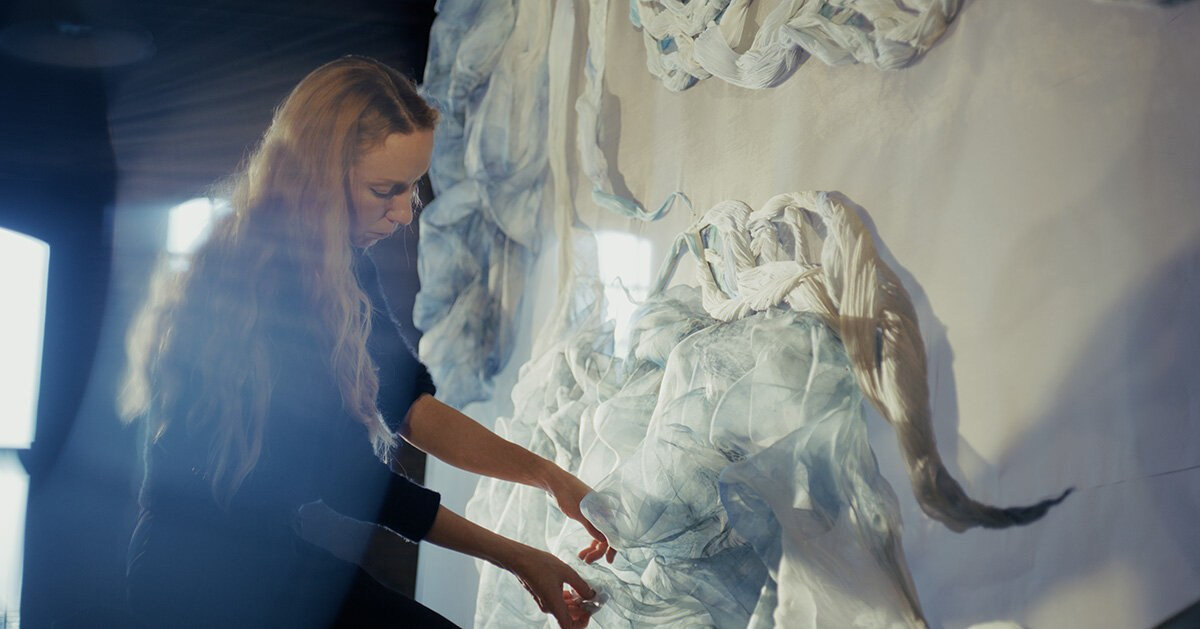
In a conversation with designboom, the Dutch designer Iris van Herpen talks about how her couture moves beyond the limits of the human body. She sees the body as something fluid, part of a great blue planet, and technology as a way of extending the senses. She works with scientists, biodesigners and artists.

For the collection “Sympoiesis” (Greek for “making together”), she and biodesigner Chris Bellamy created a living silhouette inhabited by 125 million bioluminescent algae, Pyrocystis lunula. They glow in time with the wearer’s movement. The team had to tend to the organisms’ light, humidity, temperature and circadian rhythm. For “Sonic Starquakes”, made with Dale R. Sulak, a dress was charged in a particle accelerator and then frozen. Before the show it began to discharge on its own, and the discharges etched branching channels into its structure.

Van Herpen calls her method slow fashion. A single silhouette takes from four to ten months, and materials research lasts a year or two, which is why the designer now stages only one show a year. “Time is the new luxury,” she says. She is now preparing a project with Maison Perrier-Jouët for Design Miami. The patterns will be generated from the vibrations of microorganisms living in the soil of the vineyards.
02

“Street Photography Africa”: the street as a stage, not a backdrop.

“Street Photography Africa”: the street as a stage, not a backdrop.

Source: Wallpaper*

“Street Photography Africa”: the street as a stage, not a backdrop

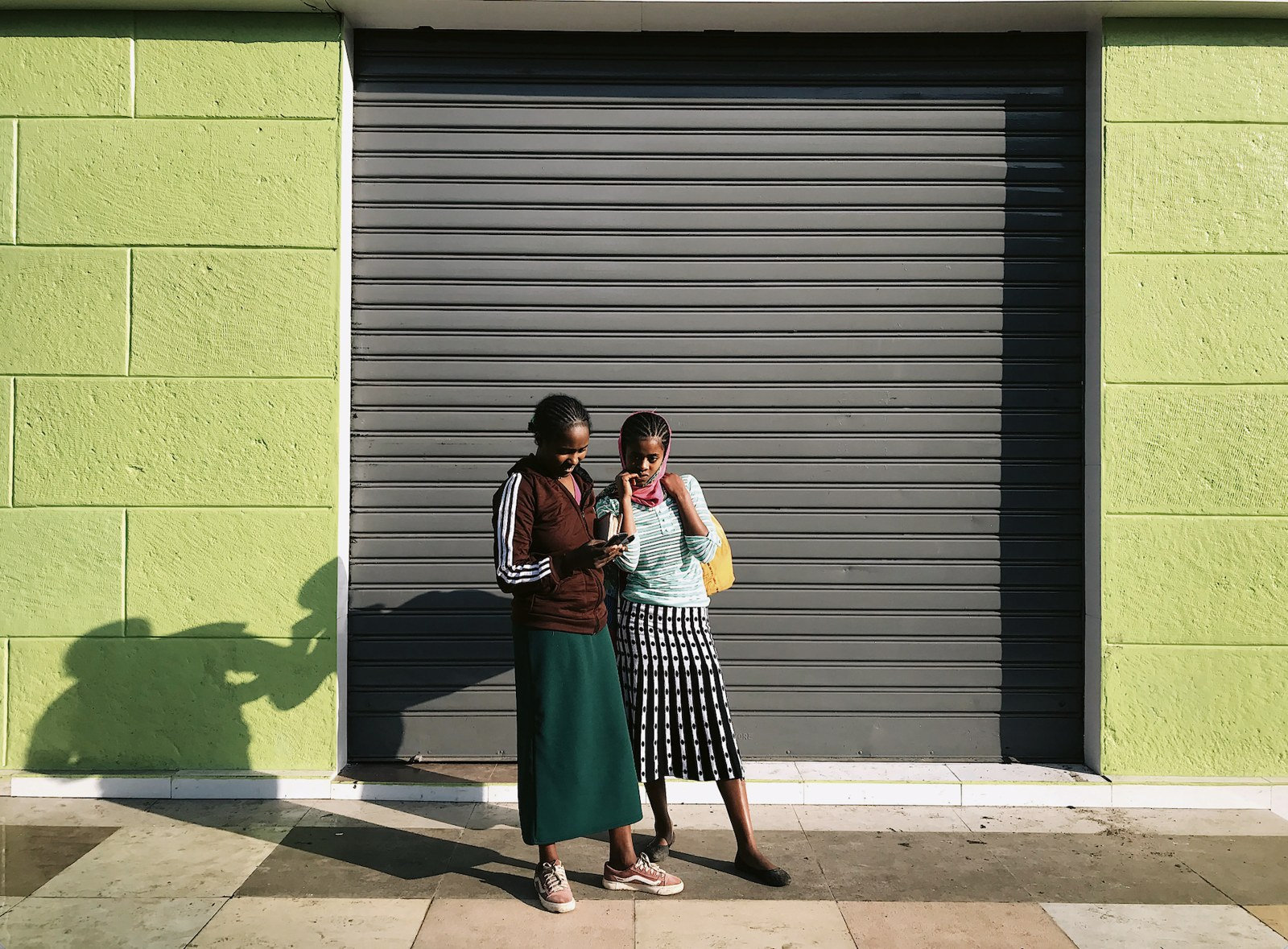
Thames & Hudson has published the album “Street Photography Africa”. It is curated by Nadine Barth and Azu Nwagbogu. The book redefines street photography. The street ceases to be a chance backdrop for passers-by and becomes a shared space, a styled stage and a living archive.

In the introduction Barth compares traditions. Europeans such as Cartier-Bresson looked for the poetry of everyday life, while Americans such as Garry Winogrand caught the chaos of New York streets. African photography focused on identity and community, and on how people want to be seen. That line runs from the staged studio portraits of Seydou Keïta and Malick Sidibé to the apartheid-era documents made by Santu Mofokeng and David Goldblatt.

The album includes, among others, Tsion Haileselassie’s “Everyday Addis”, on daily rituals and architecture; Guy Tillim’s work on decolonisation and capitalism in cities; frames by Daniel Obasi and Sarah Waiswa; and the dandies of Brian Otieno’s “Kibera Stories”. A younger generation is represented by, among others, Stephen Tayo and Youcef Krache. It is an album about fashion, portraiture, architecture and dance. In it, the street is a place of self-presentation.

03

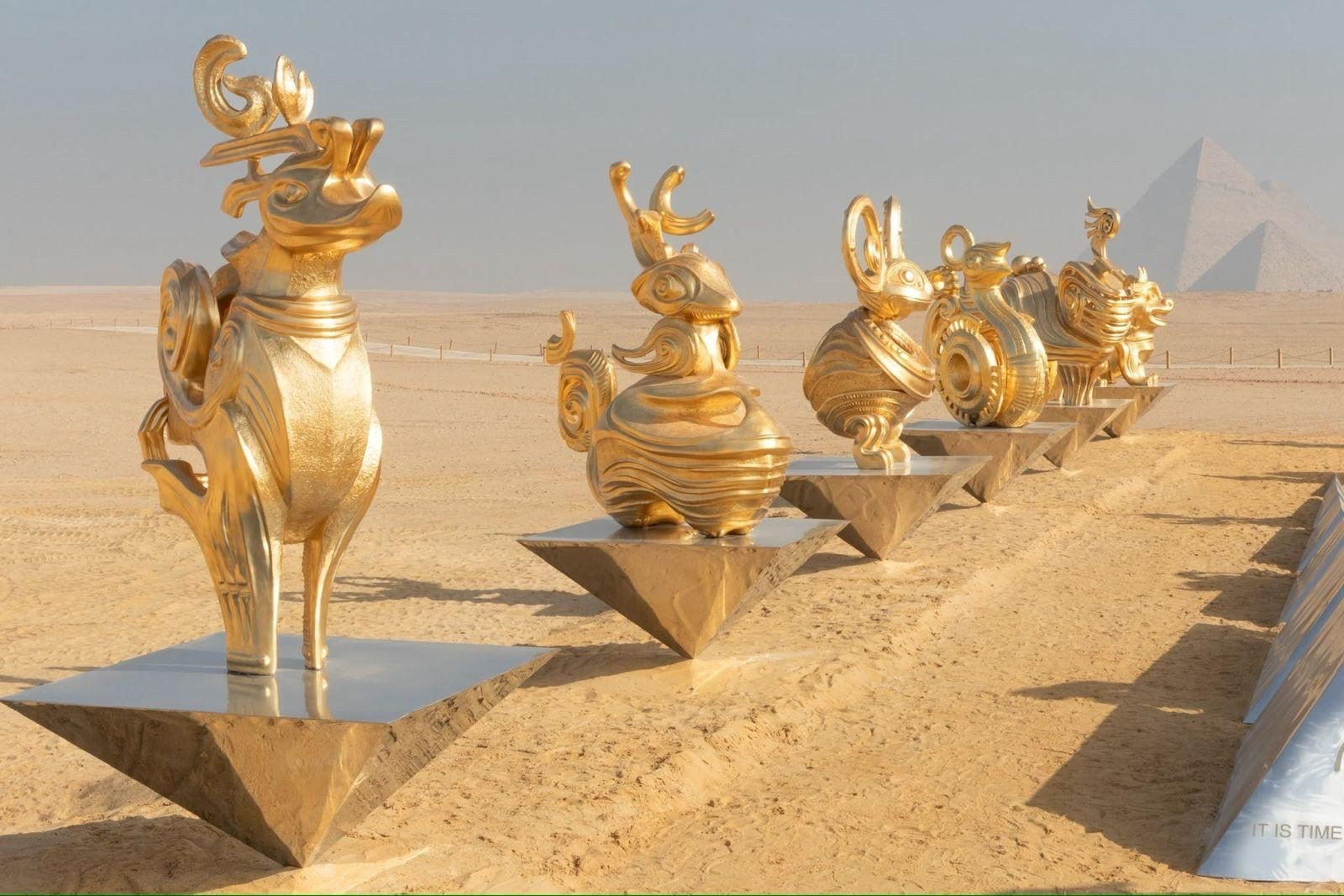
Twelve golden guardians beneath the pyramids at Giza.

Twelve golden guardians beneath the pyramids at Giza.

Source: Wallpaper*

Twelve golden guardians beneath the pyramids at Giza

The Chinese artist Jiang Qiong Er has installed “It is Time to Plant Love” beside the pyramids at Giza. It is part of the sixth edition of Forever is Now, an annual event in which artists from around the world show monumental works in dialogue with the pyramids. The exhibition runs until 28 November 2026.

Two rows of six golden hybrid creatures, each four metres tall including its plinth, frame the view of the three pyramids. The figures combine traits of mythical and sacred beings from four ancient civilisations: China, Egypt, the Indus Valley and the Maya. Each embodies a human value, such as authenticity, courage or wisdom. They stand on inverted mirrored pyramids in which the sand is reflected, and a low mirrored strip between the rows reflects the sky and the viewers. Earlier, smaller versions of these forms, in bronze and foam, were shown by the artist in 2023 at the Musée Guimet in Paris.

Gold matters here. The ancient Egyptians regarded it as a divine material, and the Great Pyramid once had a golden capstone. Jiang worked with two local goldsmiths’ workshops and travelled to Giza six times over a year to refine the proportions.

04

Experimental Roma: Fellini, Sottsass and disco fringe in a former bank.

Experimental Roma: Fellini, Sottsass and disco fringe in a former bank.

Source: Wallpaper*

Experimental Roma: Fellini, Sottsass and disco fringe in a former bank

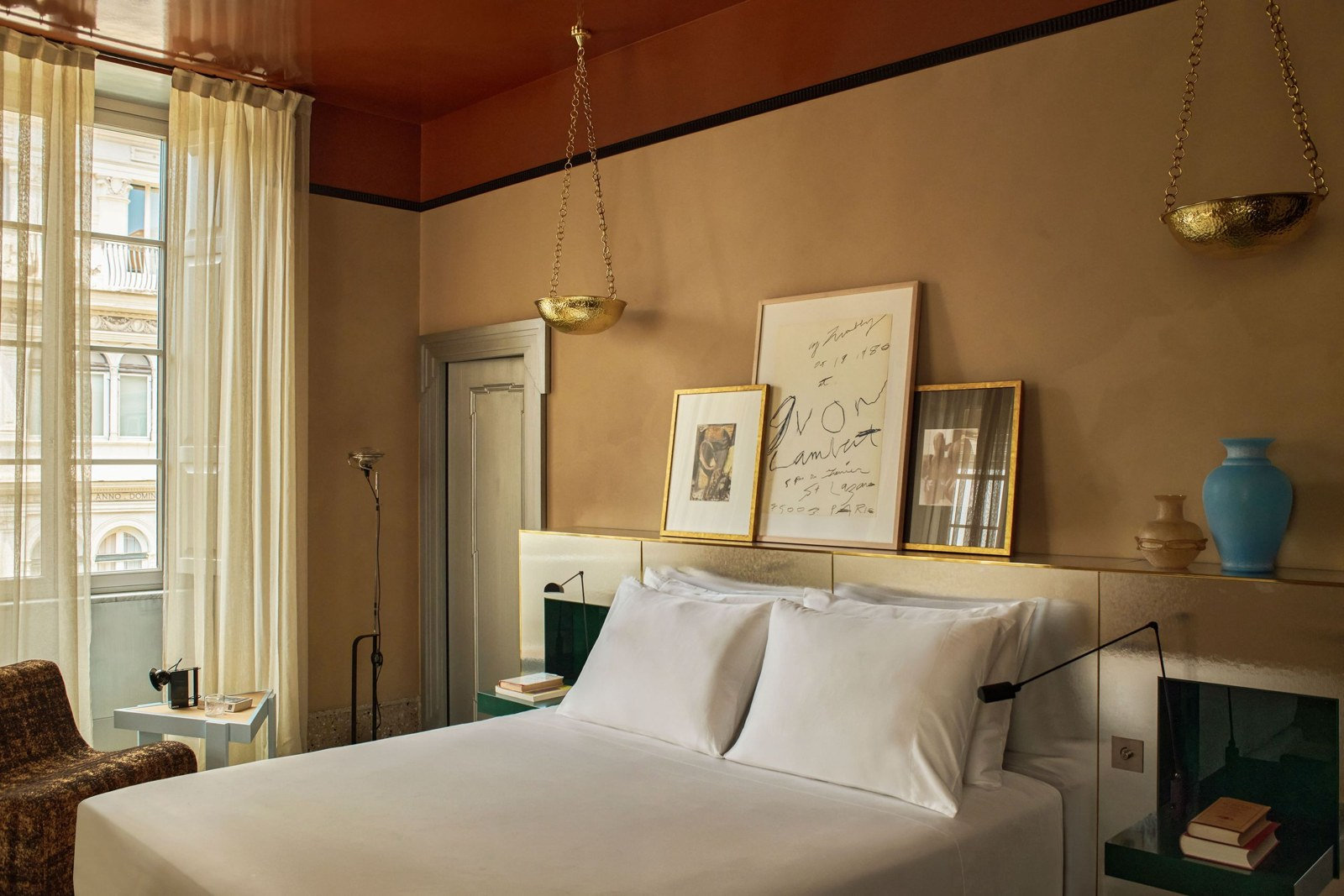
Experimental Group, the French hoteliers who began with Paris cocktail bars, have opened the 82-room Experimental Roma in Rome. The hotel occupies a nineteenth-century former bank building on Via Veneto. The interiors were designed by Paris architect Rodolphe Parente, who was given a free hand. He wanted the hotel to be Roman, but without pastiche. The inspiration was cinema: Fellini’s “La Dolce Vita”, Pasolini’s Rome and Sorrentino’s “The Great Beauty”.

In the lobby there are reliefs alluding to ancient Rome and a geometric chandelier of chrome tubes straight from the 1970s. In the restaurant Ludovisi e Cadore hangs a cluster of spherical lamps that mimic paparazzi flashes. The art was curated by Maurizio Faraoni. Cy Twombly works hang in the junior suite, and throughout the hotel there are photographs from 1974, when Christo and Jeanne-Claude wrapped a stretch of the Aurelian Walls at Porta Pinciana.

The rooms have red-orange draped headboards inspired by the Stanza degli Uccelli at Villa Medici, and dressing tables with metal disco fringe. Laminate Formica bar-cabinets are a nod to Ettore Sottsass, and gold bedside tables recall Gabriella Crespi’s furniture. Almost everything was designed by Parente’s studio and made in Italy.

05

Stilettos from a Roman road and mammoth bone: the Ex Situ project.

Stilettos from a Roman road and mammoth bone: the Ex Situ project.

Source: Dezeen

Stilettos from a Roman road and mammoth bone: the Ex Situ project

Dutch designer Marisa Klaster and archaeologist René Isarin initiated the Ex Situ project. In it, designers work with “selected” archaeological finds. These are duplicates, poorly preserved objects or ones of little scientific value that, under Dutch law, must be carefully destroyed if they are not used in education. With the consent of the province of South Holland, the materials were given to nine makers.

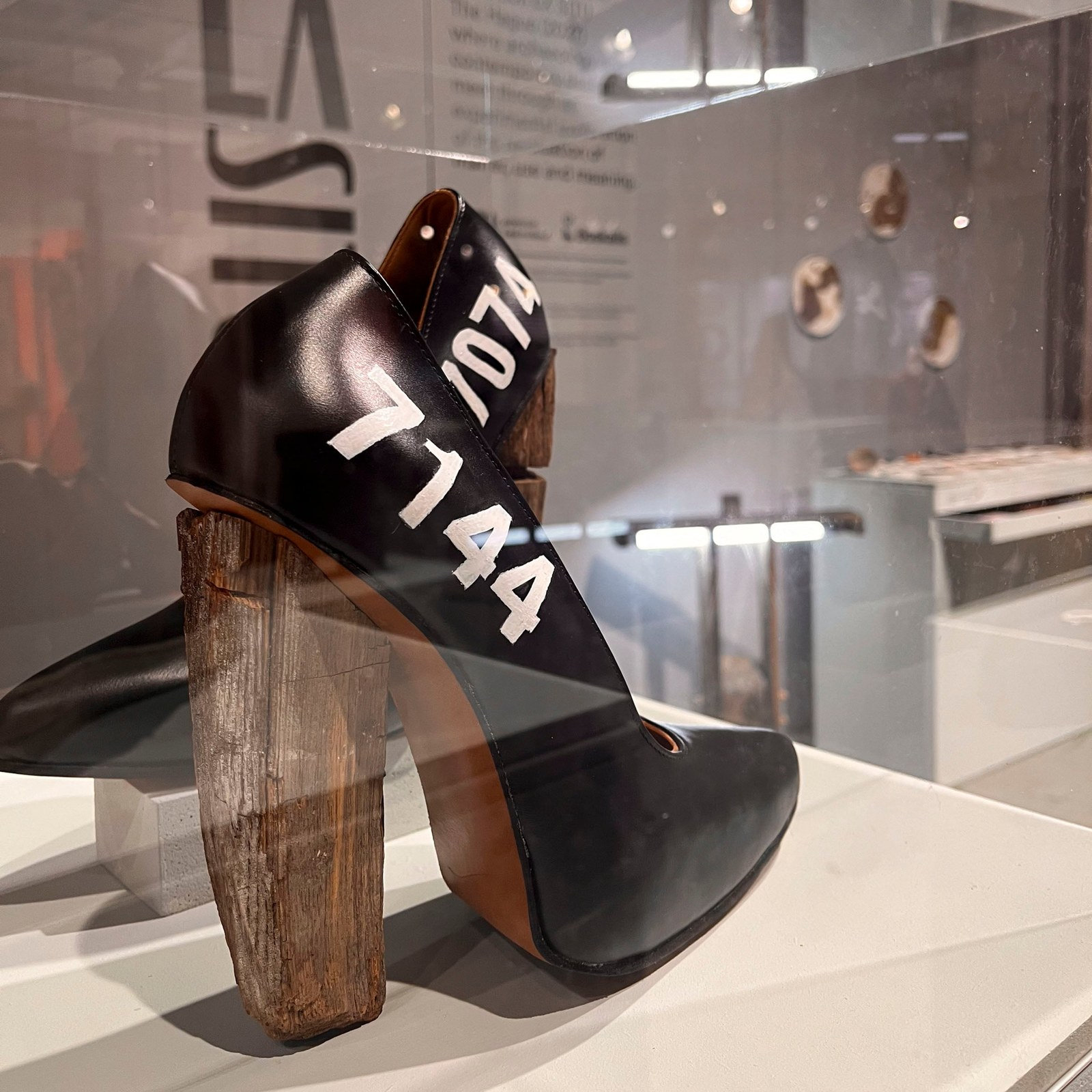
Footwear designer Judith Sanders made stiletto heels from piles of a Roman Limes frontier road from 125 CE, built under the emperor Hadrian. Large numbers on the sides of the shoes indicate the excavation site the wood came from. A second pair, in the shape of sneakers, was sewn from medieval leather. Daan Simons made “Remembrance Pots” from fourteenth-century wood from a shipwreck. Shahar Livne works with 40,000-year-old mammoth bone, Bernard Heesen with seventeenth- and eighteenth-century glass, and Lotte Douwes with Roman ceramics.

Isarin says that for archaeologists this material is, in a sense, sacred. The project is meant to provoke a discussion about ethics, especially about what would happen if such objects went on sale. The exhibition “Ex Situ: Matter in Translation” will be at See Lab in The Hague from 5 February to 7 March 2027.