22

[ DAILY ] · BB–D–261122

22 November 2026

Sunday, 22 November 2026 / 5 stories

Art, interiors, photography, designers

01

“Malvestir”: MoMA PS1 on how Latin America dresses.

“Malvestir”: MoMA PS1 on how Latin America dresses.

Source: Hyperallergic

“Malvestir”: MoMA PS1 on how Latin America dresses

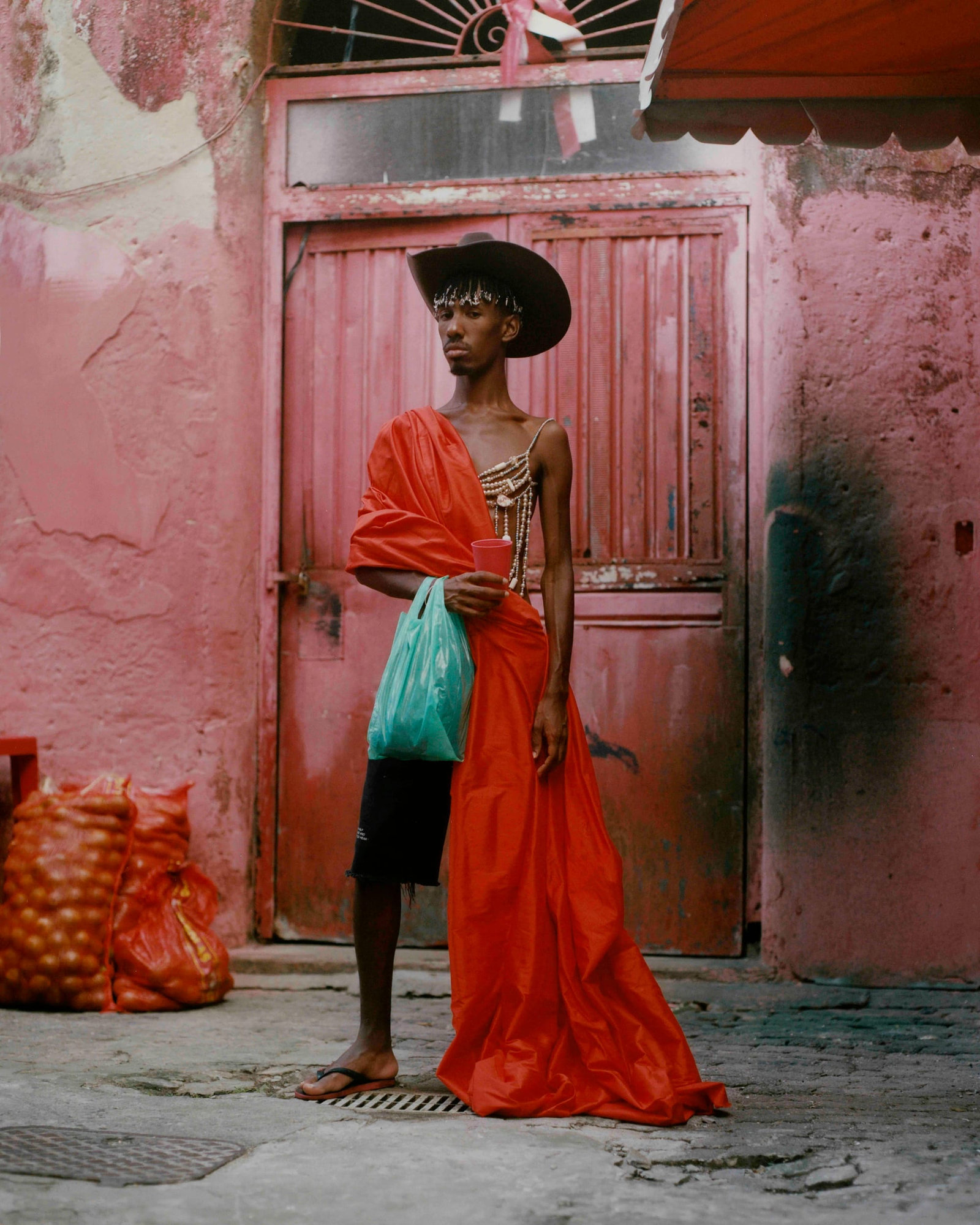
MoMA PS1 has announced the exhibition “Malvestir”, which in April 2027 will show work by 20 artists and designers from the Americas. The title is a blend of the Spanish words mal (badly) and vestir (to dress), and the subject is the visual language of Latin American fashion: the West’s appropriation of Indigenous craft, vast quantities of textile waste, and the fetishisation of Latino style. It is curated by PS1 director Connie Butler and Elena Ketelsen González.

Participants include Patricia Belli, Troy Montes Michie, Camila Falquez and Willy Chavarria, who will show the film “Safe From Home” (2024), developing themes from his autumn-winter 2024 collection. Carla Fernández works with Mexican artisans to protect Indigenous motifs from commercial copying. Josh Tafoya from New Mexico continues the family tradition of Rio Grande weaving, and David Ramirez Cotón paints hyperrealist acrylic pictures cut into the shape of clothes hanging on a hanger in a thrift store.

This is an exhibition in which fashion becomes a material for art. Colour, cloth and cut speak here of identity, handwork and resistance.
02

Miti Ruangkritya and two decades of Thai politics in images.

Miti Ruangkritya and two decades of Thai politics in images.

Source: 1854 / British Journal of Photography

Miti Ruangkritya and two decades of Thai politics in images

Miti Ruangkritya was born in Bangkok in 1981. He works with photography, video, found images and text, and his publications are in the collections of Tate (in the Martin Parr collection) and the Metropolitan Museum of Art. Since 2006 he has published the zine series “Thai Politics”. In a conversation with 1854 he talks about how the project became a record of political change and of changes in the images themselves.

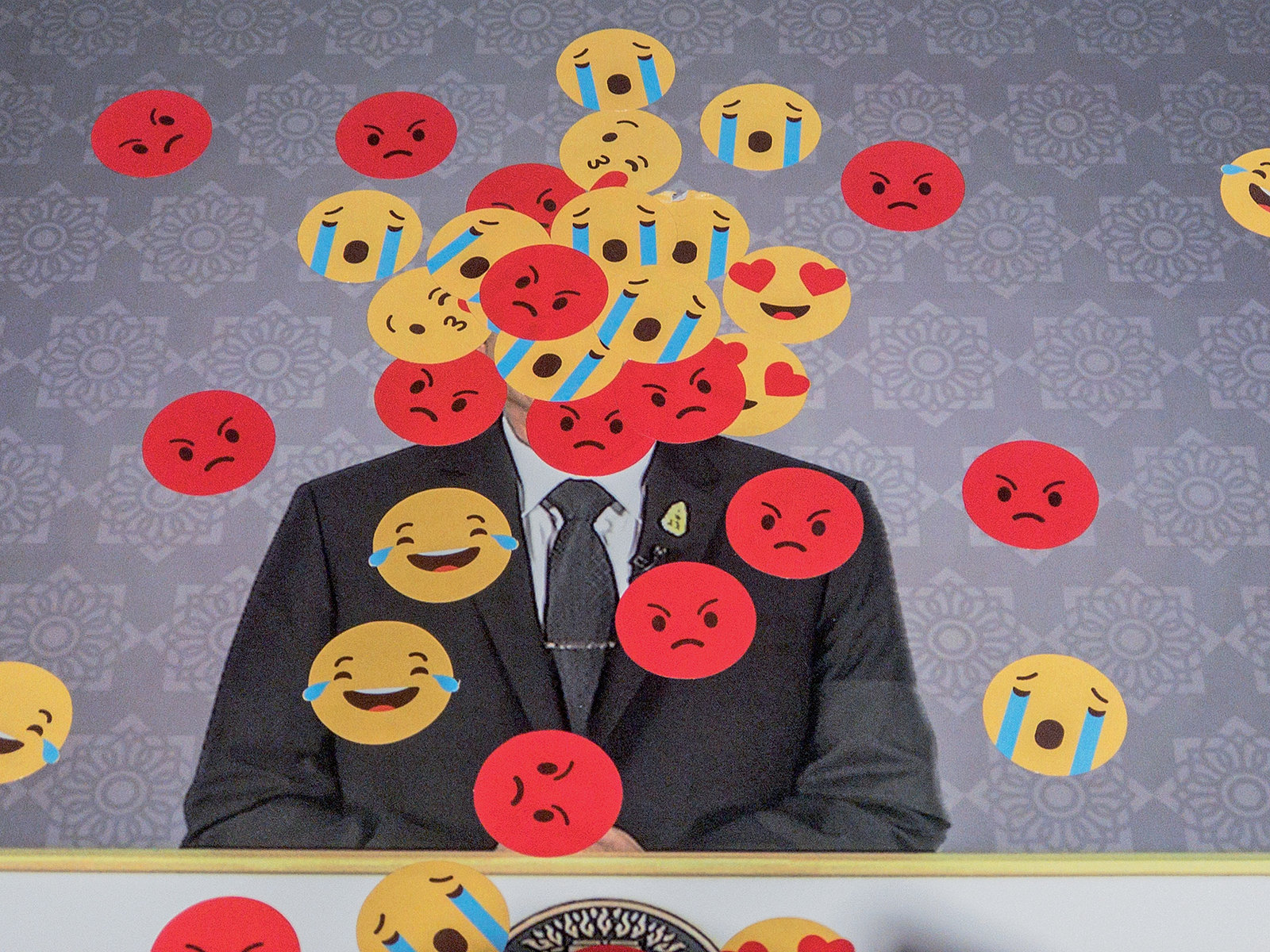
The first part consists of black-and-white film photographs of T-shirts worn by protesters in the Yellow Shirts movement. In later issues the artist increasingly collects and assembles other people’s images. “No 2” (2011) was made from photomontages from the Facebook group “Thaksin, Where Are You?”, which pasted the exiled prime minister into absurd situations. “No 4” examines selfies by anti-government demonstrators. Ruangkritya says he sees no hierarchy between a photographer’s picture and a meme or a selfie.

He deliberately prints the zines cheaply, at laser-print shops for students, so that they resemble flyers. He regards colour shifts between print runs as part of the work. This is photography as an archive of ephemeral image culture.

03

Sheena Liam: embroidered dancers with thread braids.

Sheena Liam: embroidered dancers with thread braids.

Source: Colossal

Sheena Liam: embroidered dancers with thread braids

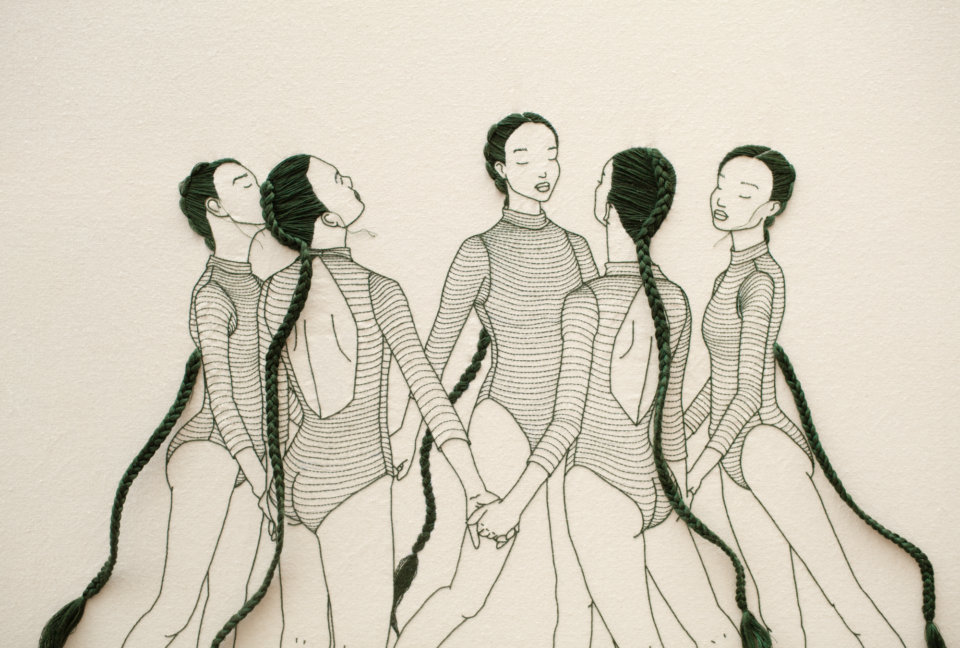
Sheena Liam, a model and ballet dancer, carries her sense of movement and elegance into embroidery. For several years she has stitched delicate portraits of women with long, three-dimensional braids that spill beyond the fabric. Sometimes a single thread slips from the plait and crosses the sitter’s cheek.

New works are on view in her solo exhibition “The Unbearable Lightness” at Item Gallery in Paris, open until 19 December. In many of them the figures wear the same striped, open-backed bodysuit. The dancers hold hands in a circle, clasp one another at the waist, or stretch out in solitude. Their movements are calm and assured.

The cycle was made over eight years. Liam is interested in women’s work and in the idea that slow, careful sewing can be an act of resistance to a fast, digital world. Each piece begins with a sketch, which the artist covers with thread and finishes with smooth braids. It is a minimalist, graphic line with a very physical texture.

04

Limestone, pink marble and hidden blue rooms: Nikos Koulis’s boutique in Paris.

Limestone, pink marble and hidden blue rooms: Nikos Koulis’s boutique in Paris.

Source: designboom

Limestone, pink marble and hidden blue rooms: Nikos Koulis’s boutique in Paris

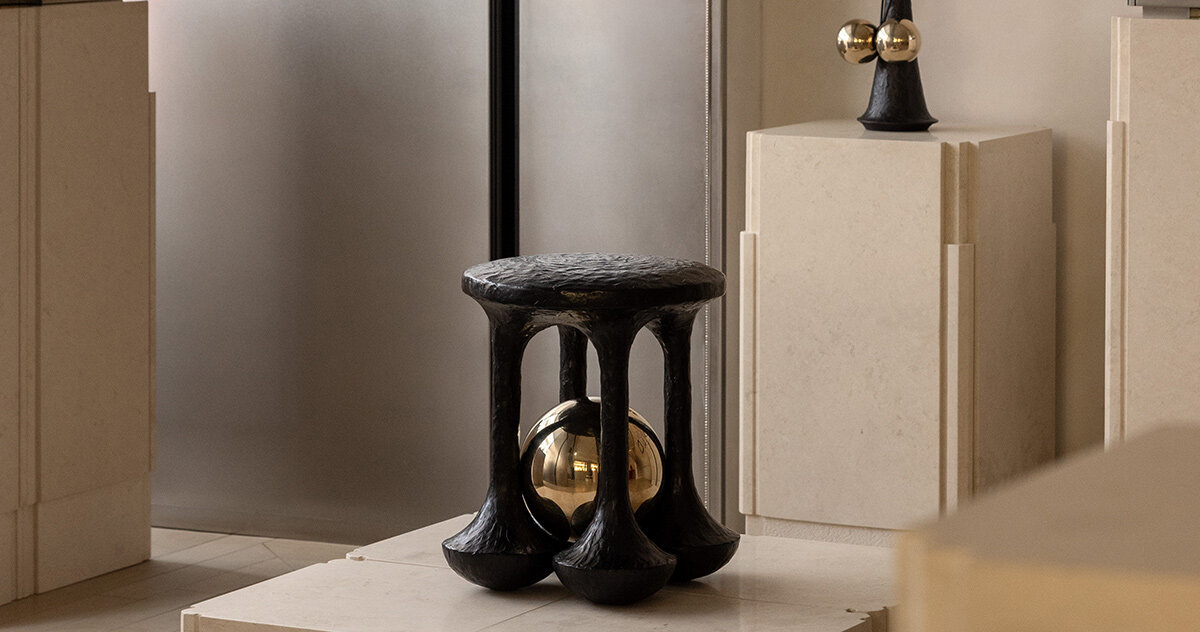
The London practice Bureau de Change has designed the Paris boutique of Greek jeweller Nikos Koulis. It occupies an eighteenth-century townhouse on rue Boissy d’Anglas and is their second collaboration after the flagship in Athens. On the ground floor there is herringbone wood, powdery plasters and monolithic limestone plinths. The architects impressed into the stone the negative of the base of a metal display case from Athens. The lower part of the blocks is raw, the upper part polished. The metal window frames allude to the ornamental edges of Parisian zinc bars.

Pink marble appears in chiselled door handles and in a sculptural, “floating” stair rail. The upper floor resembles a private apartment: furniture and works from Koulis’s collection, red accents, a place for private meetings and dinners.

The most intriguing elements are two cross-shaped cabinets. When opened they become octagonal rooms. One conceals eight triangular jewellery vitrines around a deep-blue interior you can step into. The other becomes a bar. The photographs were taken by Chloé Le Reste.

05

Ten posters for ten years of the Design Museum in Kensington.

Ten posters for ten years of the Design Museum in Kensington.

Source: Dezeen

Ten posters for ten years of the Design Museum in Kensington

On 24 November London’s Design Museum marks ten years in Kensington, in the former Commonwealth Institute rebuilt by OMA, Allies and Morrison and John Pawson. For the occasion it asked ten designers for anniversary posters.

Margaret Calvert, co-author of the cult 1960s typefaces Transport and Motorway that still appear on British road signs, designed a poster in the style of a direction sign. It shows a fork between Kensington and Shad Thames, where the museum operated from 1989 to 2016. Jony Ive and the studio LoveFrom chose minimalism: a grey-and-white composition of two simple shapes resembling a “10”. Tim Burton drew two of his characters sitting on that number. Hella Jongerius showed a colourful woven tapestry.

The set also includes A Practice for Everyday Life, Marina Willer, Paul Smith, Sebastian Conran, Simone Brewster and Tom Dixon. Together the posters show how varied design languages can be today: from utilitarian typography to craft and illustration.