18

[ DAILY ] · BB–D–261118

18 November 2026

Wednesday, 18 November 2026 / 6 stories

Art, interiors, photography, designers

01

A dress poured from biomaterial: Carolina Zimbalist dresses Emma Watson.

A dress poured from biomaterial: Carolina Zimbalist dresses Emma Watson.

Source: Dezeen

Fashion and designers — A dress poured from biomaterial: Carolina Zimbalist dresses Emma Watson

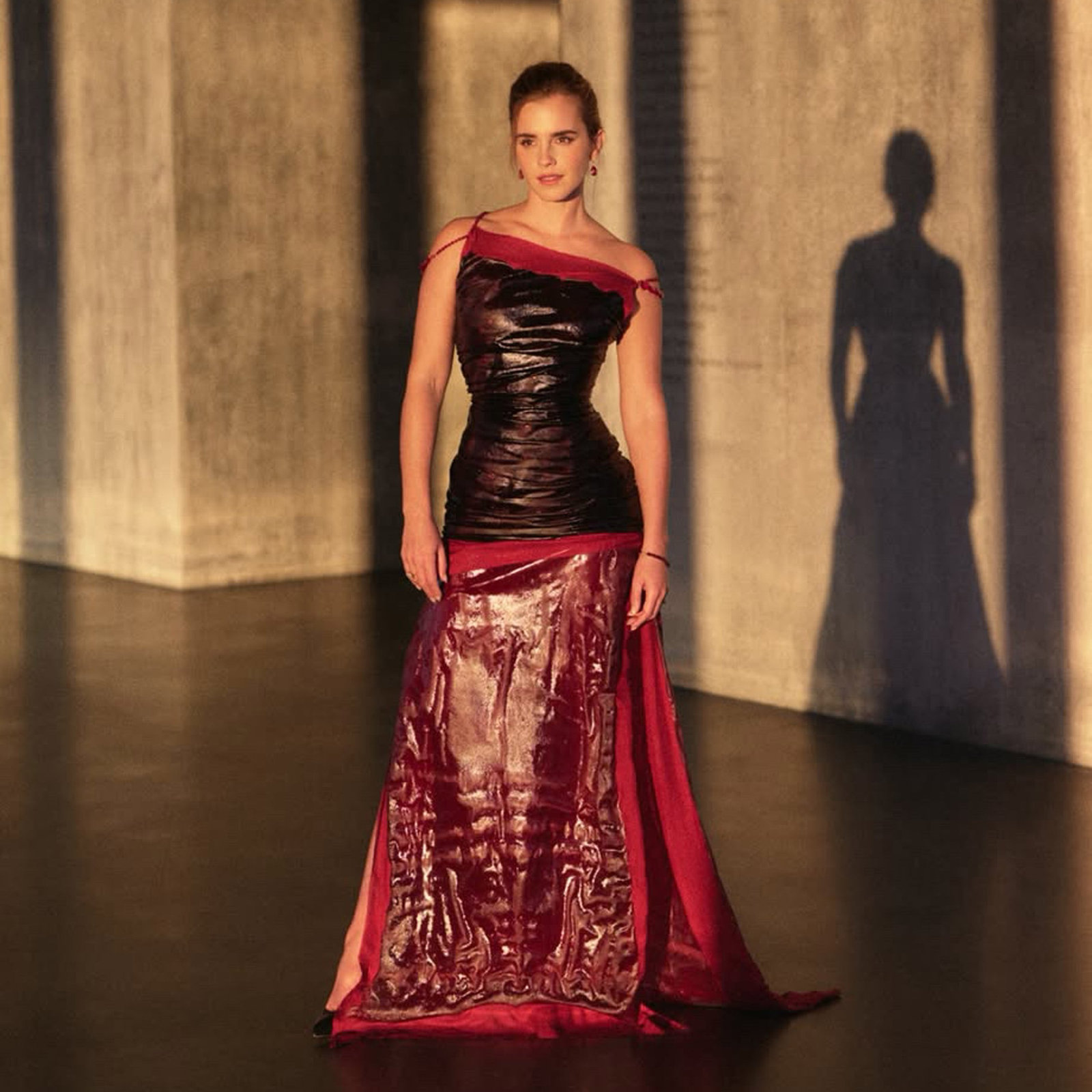
At the 15th Art+Film gala at the Los Angeles County Museum of Art, Emma Watson appeared in a dress she co-created with the artist Carolina Zimbalist, a graduate of Parsons School of Design. It is a one-of-a-kind design: an elongated corset and a floor-length skirt in shades of red, made from a homemade recipe of bioplastic that Zimbalist has used in her art for years.

The material is petroleum-free: it is poured and dried, and its composition includes vegetable glycerin and natural proteins, including pea powder. Here it was applied to silk, itself a natural biopolymer. Once dry it forms sculptural shapes and flexible surfaces that move with the body. For several seasons the artist has no longer said “bioplastic”, only “biomaterial”, because with the first word people focus on the plastic.

Zimbalist has already dressed stars: in 2024 Chappell Roan performed in her hand-painted garden dress, made in part from seaweed. The designer also makes ethereal lamps and vases. This dress is proof that biomaterials can look like haute couture, and not like a laboratory experiment.
02

“Sheila”: John Divola and portraits of a loved one in abandoned houses.

“Sheila”: John Divola and portraits of a loved one in abandoned houses.

Source: AnOther

Photography — “Sheila”: John Divola and portraits of a loved one in abandoned houses

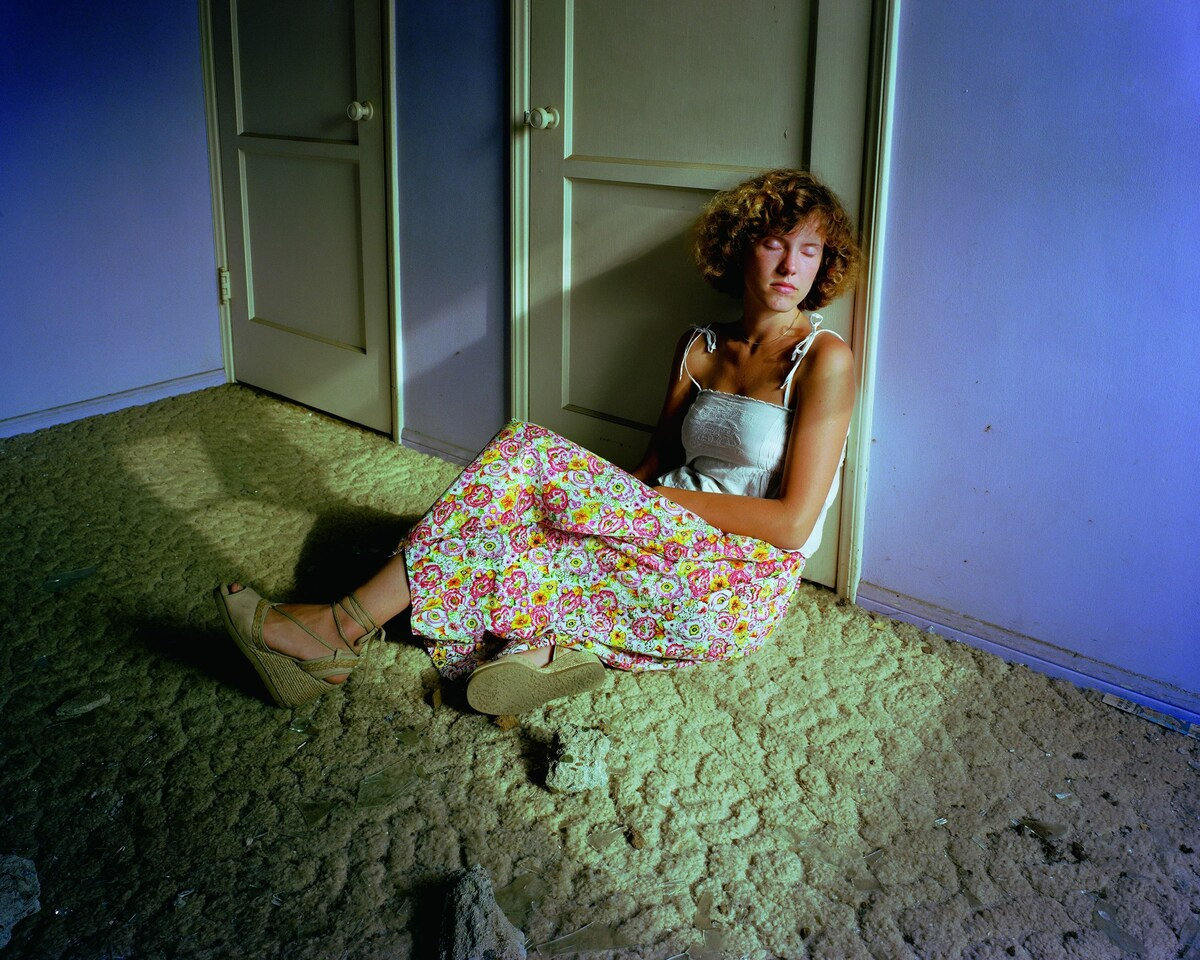
The publisher TBW has released “Sheila”, a new photobook by John Divola. The title is the name of the photographer’s former wife, and her figure holds the whole book together. Most of the rarely shown portraits were made between 1976 and 1984. Divola interweaves them with the series for which he is best known today. So Sheila stands in decaying beach houses on the Pacific in the “Zuma” cycle (1977–1978), against spray-painted walls and California sunsets. She also sits on the carpet in a deserted laundry room with lilac walls, in a house in the noise zone by LAX airport, with a floral skirt spread around her legs.

The photographer does not want the book to be read as a biography or a love story. Even so, in the afterword he admits that in 1975 he fell in love “hopelessly and deeply”. He calls photography a melancholy medium, because it always shows the past. Asked whether this is a fetishisation of absence, he answers simply: “yes”. He sequenced the pictures together with Paul Schiek, mixing black and white with colour and square frames with rectangular ones.

An exhibition accompanying the book can be seen at Luisotti Gallery in Los Angeles until 9 January 2027.

03

Kvareli Foundation: a Georgian answer to Naoshima.

Kvareli Foundation: a Georgian answer to Naoshima.

Source: Wallpaper*

Contemporary art — Kvareli Foundation: a Georgian answer to Naoshima

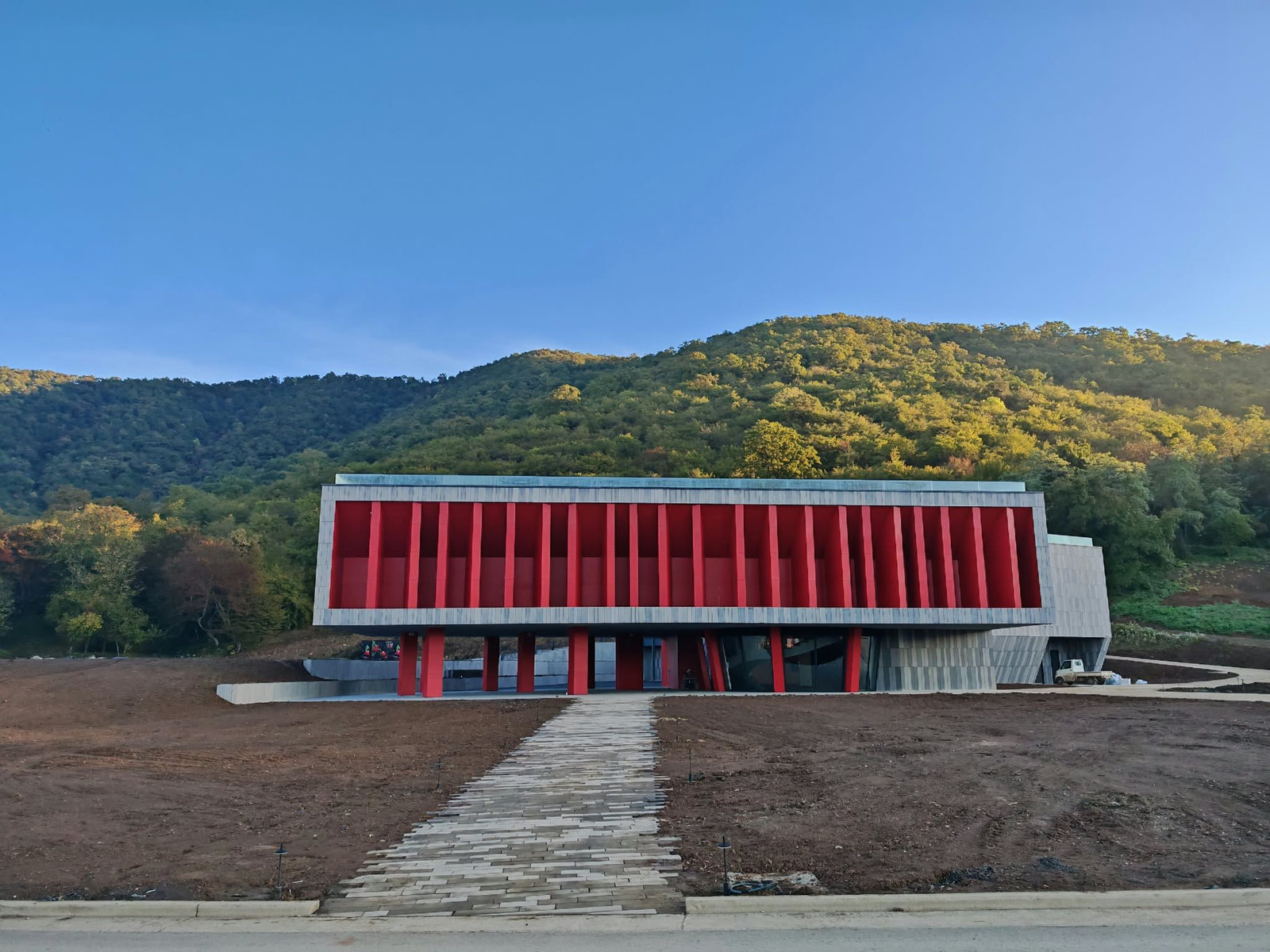
In the Kakheti region, famous for its wine, about 130 km from Tbilisi, the Kvareli Foundation of Contemporary Art has opened. The building stands among wild meadows and wooded slopes, with a view of the vineyards. The founder, entrepreneur Jemal Inaishvili, took his inspiration from the Japanese art island of Naoshima. The institution’s foundation is a selection from his collection of around 1,500 works, most of them Georgian. The foundation is the heart of a complex with a vineyard and a 94-room boutique hotel, which is due to open by the end of 2026.

The design was prepared by the Tbilisi practice Midamo (Giorgi Chkonia and Dato Danelia) and developed by the foundation’s architect Irakli Sharpilo. The elongated concrete volume has a dense rhythm of red ceramic vertical lamellae in a frame of grey panels. An entrance lined with a weave of basalt slabs and a winding stair lead into the gallery. Over three floors a classic white cube gives way to raw, exposed structures and installations, and the whole is closed by an amphitheatre leading onto the roof.

The inaugural exhibition “Georgian Contemporary Art: Origins and Continuities” shows Georgian art from the 1960s to the present, including its departure from Soviet narratives. According to creative director Nino Sulkhanishvili, contemporary Georgian art still lacks adequate representation in the country, and this place is meant to change that.

04

John Pawson, a white spiral stair and a Baroque portal in Madrid.

John Pawson, a white spiral stair and a Baroque portal in Madrid.

Source: designboom

Interiors and design — John Pawson, a white spiral stair and a Baroque portal in Madrid

The Madrid EDITION grows out of history. In the eighteenth century Pedro de Ribera carved the portal of the chapel of the Monte de Piedad, a charitable pawnbroker founded in 1702. In the 1960s the bank that grew from it demolished the chapel, but kept the portal and set it into the façade of its new office building. That building has now been converted by OAB and Ruiz-Larrea, and the interiors were designed by John Pawson and François Champsaur, under the eye of Ian Schrager.

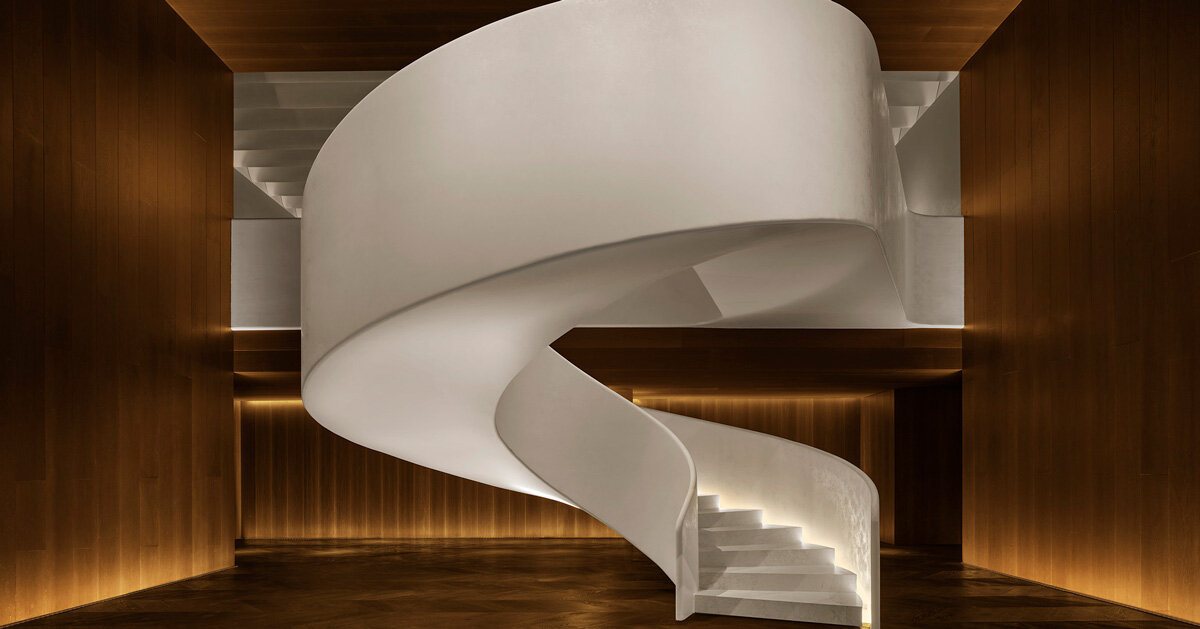
The signature is Pawson’s sculptural white spiral stair, without visible handrails, set into the dark wood of the lower entrance. In the lobby, under an undulating ceiling, stand reissues of Jean-Michel Frank sofas, stools of reclaimed bronze from the Maison Intègre foundry in Ouagadougou, chairs wrapped in rope by Christian Astuguevieille, and a billiard table cut from a single block of Bianco Neve marble. The Punch Room is dark oak, a basalt fireplace and horsehair armchairs.

Baroque ornament returns in the oak panels of the double-height restaurant and in the plaster headboards of all 200 rooms. This is a minimalism that does not cut itself off from history, but reworks it.

05

Harry Nuriev and the aesthetic of discomfort.

Harry Nuriev and the aesthetic of discomfort.

Source: Dezeen

Emerging visual trends — Harry Nuriev and the aesthetic of discomfort

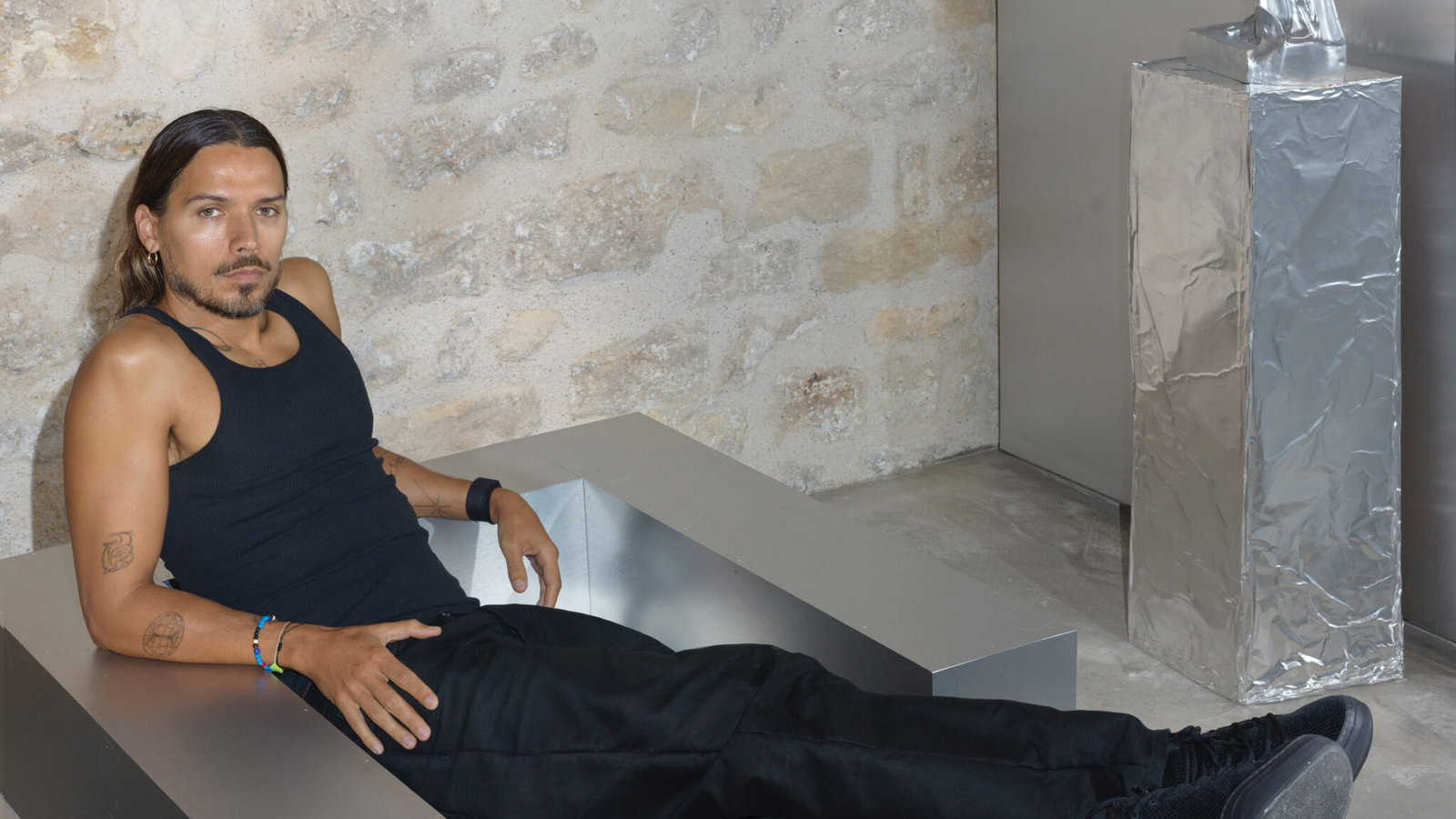
To open the 20×20 series marking Dezeen’s 20th anniversary, Bjarke Ingels named the designer who, in his view, will most strongly influence the next two decades. He chose Harry Nuriev, the founder of Crosby Studios, working between New York and Paris. Nuriev was recently named Designer of the Year at Maison&Objet. His portfolio includes a sofa for Balenciaga, pop-ups for Skims, a water mirror for Gucci and a chandelier for Baccarat.

He founded the studio 12 years ago, in defiance of the styles then dominant: Japanese minimalism and classicism. When everyone was using wood and beige, he did without them. He took colours from fashion, textures from architecture. He himself admits that Crosby is responsible for “all that steel, futuristic, uncomfortable, Instagram aesthetic”. He also says that comfort is a myth, and that complete relaxation can “suck the strength out of you”.

He calls his method “transformism”: you cannot create anything entirely new, but you can give an existing thing a new life. He compares his projects to a dessert — an experience, not an everyday meal. They work best at a medium scale: an installation, a shop, a hotel lobby.

06

Jennifer Latour assembles nonexistent creatures from flowers.

Jennifer Latour assembles nonexistent creatures from flowers.

Source: designboom

Photography and art — Jennifer Latour assembles nonexistent creatures from flowers

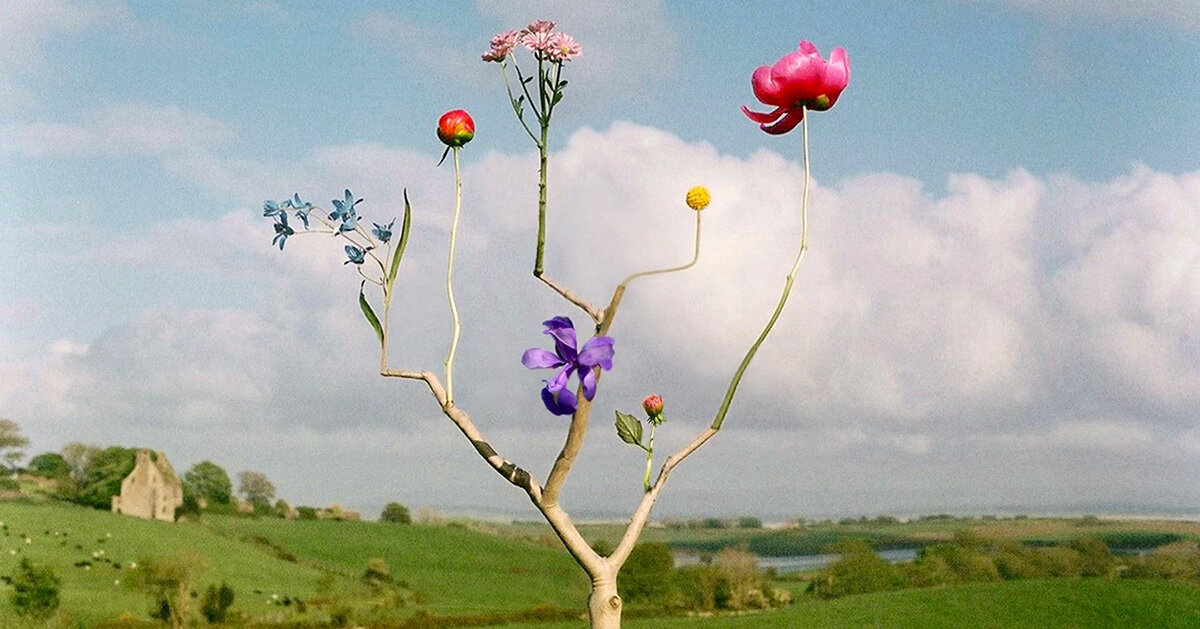
Jennifer Latour, an artist and photographer from Vancouver, in the series “Bound Species” and “Shapeshifters” combines flowers, stems and buds into unknown organisms with something like limbs and bodies. She comes from Sept-Îles in Quebec and for years made special-effects makeup — prosthetics and fictional creatures for film and television. Now she builds characters from plants in the same way. Each composition is made physically and then photographed, often outdoors, for example by Lough Gill in Ireland.

She has photographed since 2006, and came to floral still life during the first lockdown in 2020. When a work is finished is often decided by wilting. The wind has more than once scattered a finished sculpture at the moment she reached for the camera. She works instinctively: she imagines how a given form would speak and walk if it were alive.

As inspirations she names Alexander Calder’s mobiles, Isamu Noguchi’s wooden sculptures, Tim Walker’s photographs and the films of Wes Anderson and Tim Burton. In her pictures you can see that fairy-tale, carefully staged surrealism.